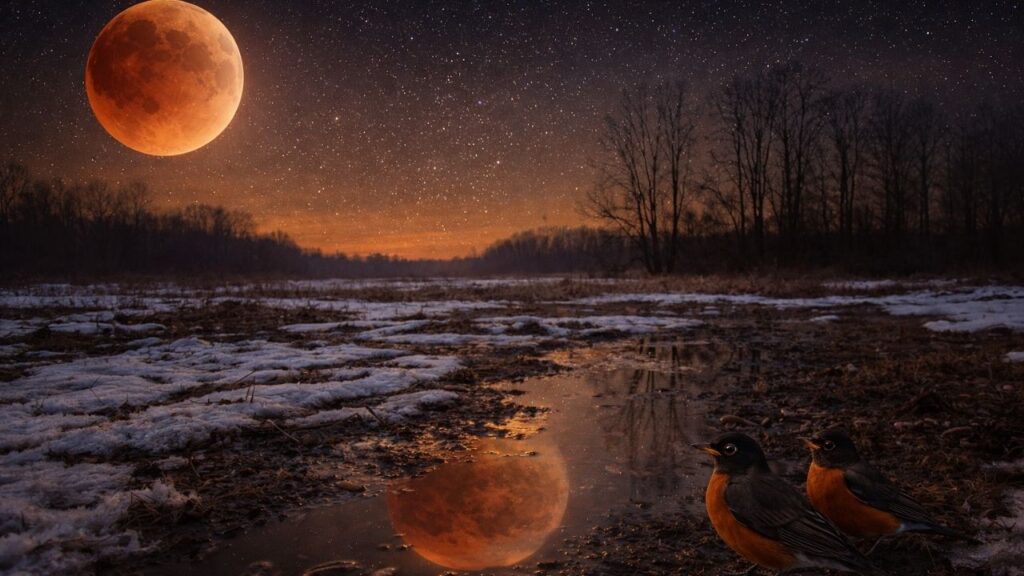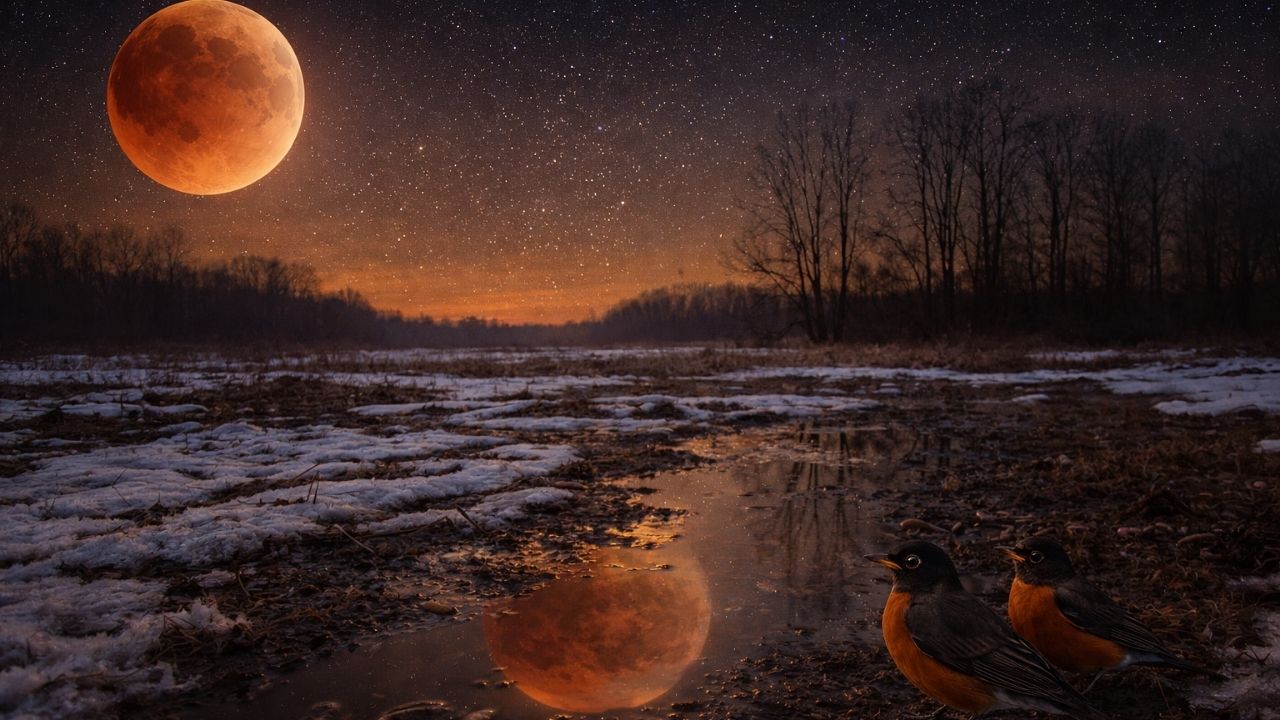
For one night in March 2026, the sky will do something unusual. A full moon will rise bright and familiar—then slowly darken, shift, and glow a deep copper red. This isn’t just another full moon. It’s the Worm Moon paired with a total lunar eclipse, a rare combination that marks both a seasonal turning point on Earth and a striking celestial event overhead.
What Is the Worm Moon—and Why It Matters

The March full moon is traditionally known as the Worm Moon, a name tied to the moment winter begins to loosen its grip. As temperatures rise slightly, the ground softens and earthworms return, signaling the start of early spring activity.
This name reflects a real seasonal shift. Birds begin to reappear, soil becomes workable again, and daylight slowly stretches longer. It’s not full spring yet—but it’s the beginning of change. In 2026, this already meaningful full moon becomes even more important because it aligns with a major astronomical event.
Latest Stories
 Scientists Capture 8 Incredible Images of Interstellar Comet Passing Through Our Solar System
What’s Happening in 2026
During the 2026 Worm Moon, Earth will pass directly between the Sun and the Moon, creating a total lunar eclipse.
As this happens, Earth’s shadow will gradually cover the Moon. Instead of disappearing completely, the Moon will turn shades of red, orange, or copper. This effect is caused by sunlight filtering through Earth’s atmosphere—essentially projecting all the world’s sunrises and sunsets onto the Moon at once. It’s a slow, visible transformation that anyone can watch without special equipment.
Why This Event Is So Special
Lunar eclipses don’t happen every full moon. They require a precise alignment between the Sun, Earth, and Moon. When that alignment coincides with a seasonal full moon like the Worm Moon, it adds an extra layer of significance.

This event stands out because it connects two different cycles:
- Seasonal change on Earth (the shift toward spring)
- Orbital alignment in space (the eclipse itself)
In simple terms, it’s a moment where what’s happening on the ground and what’s happening in the sky line up at the same time.
What You’ll Actually See in the Sky
The night begins with a bright, full moon. Then, slowly, a dark shadow appears on one edge. Over time, that shadow spreads until the Moon is fully covered. At peak eclipse, the Moon won’t vanish—it will glow in a dim red or copper color. The sky may appear darker than usual, and more stars could become visible. As the eclipse ends, the bright white light returns, and the Moon looks normal again. The entire process takes a few hours, making it easy to observe different stages.

How to Watch the Worm Moon Eclipse
You don’t need a telescope or special gear to enjoy this event. The most important factors are timing and location.
Choose a spot with a clear view of the sky and minimal light pollution if possible. Dress warmly, since early March nights can still be cold. Bringing a chair or blanket can make the experience more comfortable, as the eclipse unfolds slowly. Checking local timing for your region is important so you don’t miss the most dramatic phases.
Why This Moment Feels Different
There’s something unique about watching a lunar eclipse. It’s predictable, yet it still feels unexpected when you see it happen in real time.
Latest Stories
 Meteorologists warn overnight snowfall could reach historic levels, as officials discourage travel
Pair that with the seasonal shift happening in March, and the experience becomes more meaningful. It’s a reminder that change is happening both around you and above you—quietly, steadily, and on a much larger scale than we usually notice.
What Happens After the Eclipse
Once the event ends, the Moon returns to its usual brightness—but the season continues to change. Warmer days follow, snow recedes in many regions, and signs of spring become more visible.vThe Worm Moon marks that transition. The eclipse simply makes it unforgettable.