Most people think of a solar eclipse as a beautiful sky event. But this time, scientists are paying unusually close attention—and for good reason.
In the coming weeks, a rare alignment between the sun, moon, and Earth will briefly turn day into night for several minutes. That short window could reveal new insights about our atmosphere, technology systems, and even how our planet reacts to sudden changes in sunlight. This isn’t just something to watch. It’s something researchers are preparing for.
What’s Happening—and Why This Eclipse Stands Out

A solar eclipse occurs when the moon moves directly between the Earth and the sun, blocking sunlight and casting a shadow across parts of the planet. While this happens occasionally, not all eclipses are equal.
Latest Stories
 Scientists Are Tracking a Secretive Bird—and What They Find Could Change Conservation
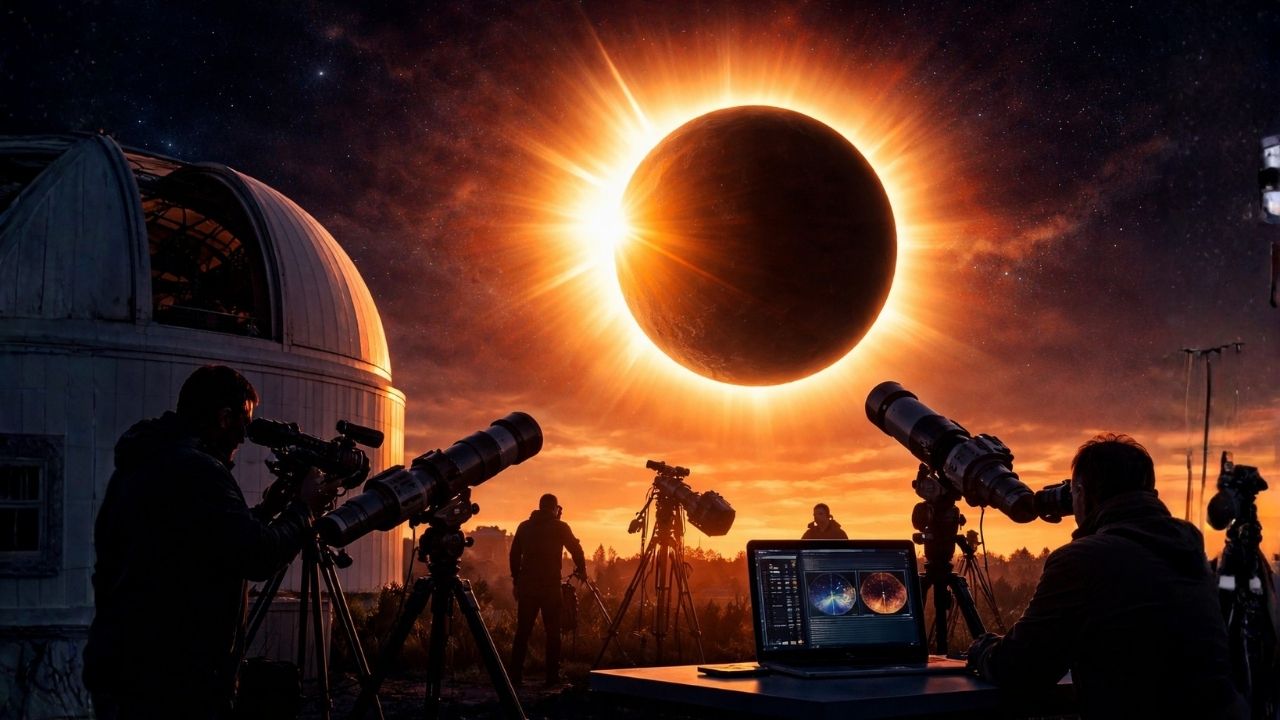
What makes this one different is its duration. Scientists expect several minutes of near-total darkness in some regions—long enough to observe changes that are usually too quick to study. That extended window gives researchers a rare chance to collect detailed data in real time. In simple terms, the longer the darkness lasts, the more we can learn.
Why Scientists Are Watching Closely
For researchers, this eclipse is less about the view and more about what changes behind the scenes. When sunlight suddenly drops, the Earth’s atmosphere reacts almost instantly.
Scientists are particularly interested in how the ionosphere—the layer of the atmosphere that affects radio signals and GPS—responds. Even small shifts here can impact communication systems we rely on every day.
Latest Stories
 Why Gulf Cities Are Importing Millions of Trees Every Year
This event allows experts to observe those changes as they happen, helping improve future forecasting and system resilience.
Could It Affect Communication and GPS?
There’s a reason experts are talking about this beyond astronomy circles. Solar radiation plays a key role in how signals travel through the atmosphere.
During an eclipse, that radiation temporarily drops, which can slightly alter signal behavior. In most cases, any disruptions are expected to be minor and short-lived. But even small changes matter for industries like aviation, navigation, and emergency services.

That’s why monitoring systems are being prepared in advance—to track and respond to any unusual patterns.
The Strange Effects You Might Not Expect
Beyond technology, eclipses can trigger subtle but fascinating changes in the natural world. Temperatures can dip quickly, winds may shift, and animals sometimes behave as if night has suddenly arrived. Scientists are also studying a lesser-known effect—low-frequency atmospheric vibrations sometimes described as “ringing.”
These shifts might seem small, but they offer valuable clues about how Earth’s systems react to sudden environmental changes.

What Happens Next After the Eclipse
The real impact of this eclipse won’t end when the sunlight returns. In many ways, that’s when the most important work begins.
Scientists will spend weeks or even months analyzing the data collected during those few minutes of darkness. The findings could improve how we understand weather systems, communication networks, and even space weather events.
In short, this eclipse could quietly shape future research and technology in ways most people won’t immediately notice.

Why This Event Matters Beyond the Sky
It’s easy to see an eclipse as just a visual experience. But events like this remind us how connected everything is—from space to our daily lives.
A brief alignment in the sky can influence atmospheric behavior, signal transmission, and scientific understanding all at once. That’s why researchers around the world are treating this as more than just a moment—it’s an opportunity. And opportunities like this don’t come often.
Frequently Asked Questions
1. What makes this solar eclipse different from others?
This eclipse stands out because of its longer duration, giving scientists more time to observe atmospheric and environmental changes.

2. Will it disrupt internet or phone signals?
Most disruptions, if any, are expected to be minor and temporary. Critical systems are prepared to handle them.
3. Can it affect weather?
Yes, short-term changes like temperature drops and wind shifts can happen during an eclipse.
4. Is it safe to watch the eclipse?
Only with proper eye protection, such as certified eclipse glasses. Never look directly at the sun without protection.

5. Will everyone be able to see it?
No, only certain regions will experience total darkness. Others may see a partial eclipse depending on location.
6. Why are scientists so interested in this event?
It provides a rare chance to study how Earth’s atmosphere and systems react to a sudden drop in sunlight.
7. What could we learn from it?
The data could improve communication systems, weather models, and our understanding of atmospheric behavior.