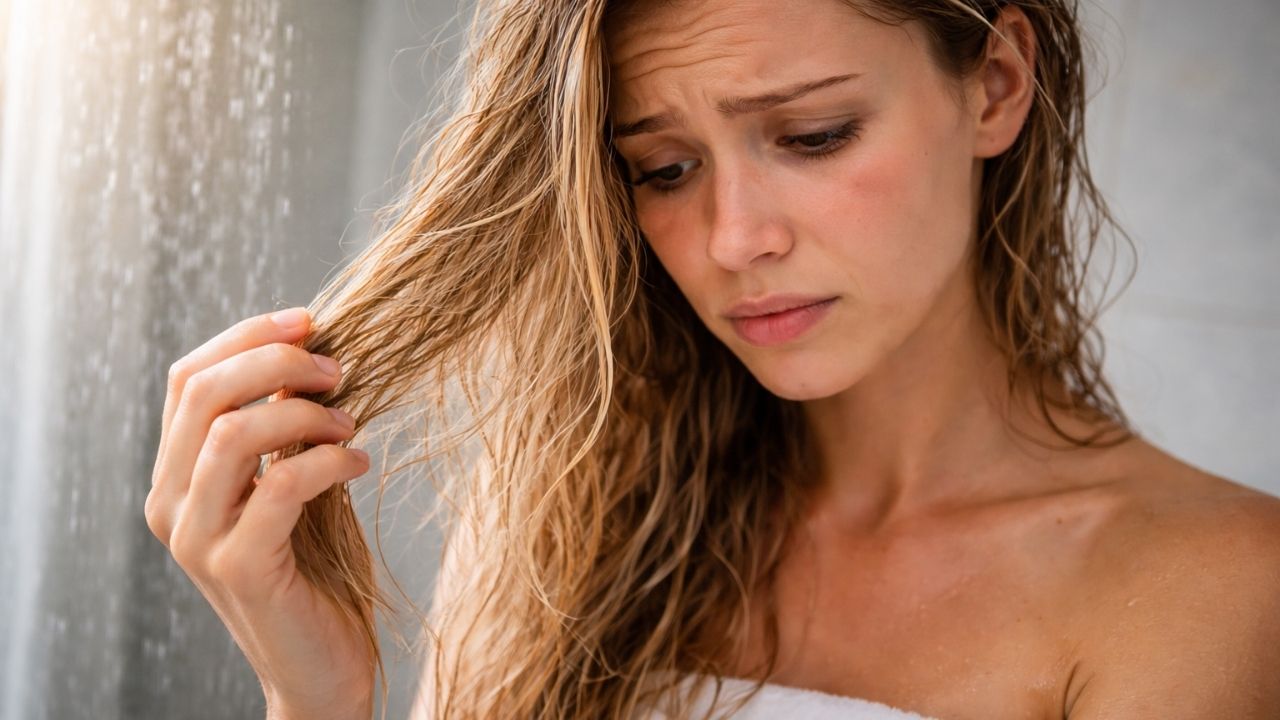
It starts subtly—your hair feels rougher than usual, harder to manage, a little lifeless. Then one day, it hits you: your once-soft strands now feel dry, brittle, and stubbornly frizzy. If that sounds familiar, you’re not alone.
Here’s the surprising truth: your daily hot shower might be the real culprit. While it feels comforting in cold weather, experts say it’s one of the fastest ways to strip your hair of the moisture it desperately needs during winter.
What’s Actually Happening to Your Hair in Winter

Winter already puts your hair under stress. Cold outdoor air lacks humidity, while indoor heating pulls even more moisture away from your strands. This leaves your hair vulnerable before you even step into the shower.

When you add hot water into the mix, it accelerates the problem. High temperatures break down the natural oils that protect your hair, weakening the structure and making it more prone to dryness, breakage, and frizz. Over time, this creates a cycle where your hair never fully recovers.
The Real Problem: Hot Water Isn’t Your Friend
Hot showers may feel relaxing, but they’re harsh on your hair. According to hair specialists, excessive heat opens up the hair cuticle too much, allowing essential moisture to escape.
This leaves your strands exposed and unprotected. The result? Hair that feels rough, looks dull, and becomes harder to style. In winter, when your hair already lacks hydration, this damage becomes even more noticeable.

The key takeaway is simple: the hotter the water, the more stress you’re putting on your hair.
Why Cooler Water Makes a Big Difference
Switching to lukewarm or cool water can completely change how your hair behaves. Cooler temperatures help keep the hair cuticle smooth and sealed, locking in moisture instead of letting it escape.
This small adjustment can lead to shinier, softer hair with less frizz. It also helps maintain natural oils, which act as a protective barrier against winter dryness. For color-treated or damaged hair, this step becomes even more important.

At first, cooler showers might feel uncomfortable—but many people quickly adapt and notice results within days.
Rethink Your Entire Shower Routine
Changing the water temperature is just the beginning. Your overall shower habits also play a major role in hair health during winter.
Long showers, even with lukewarm water, can still dry out your hair. Try to keep your shower time between 5 to 10 minutes. Use gentle, sulfate-free shampoos and always follow with a moisturizing conditioner.

After washing, avoid rough towel drying. Instead, gently pat your hair with a microfiber towel or let it air-dry whenever possible. Reducing heat styling tools can also prevent further damage.
Small Changes That Lead to Healthier Hair
You don’t need a complicated routine or expensive products to improve your hair this winter. Often, the biggest difference comes from simple daily habits.
Lowering your water temperature, shortening your showers, and choosing hydrating products can gradually restore your hair’s strength and shine. Over time, these small changes help your hair retain moisture and become more resilient against harsh weather.
Latest Stories
 Scientists Warn Arctic Atmosphere Is Shifting Fast—Why Early February Could Trigger Extreme Weather Worldwide
Consistency matters more than anything else.
What You Can Expect If You Make the Switch
If you start adjusting your routine now, you may notice improvements sooner than expected. Your hair will feel softer, look shinier, and become easier to manage.
Frizz and breakage will reduce, and your hair will hold styles better without needing excessive products. Over the long term, these habits can help prevent seasonal damage altogether.

In short, your hair won’t just survive winter—it can actually look better than before.
FAQs
How often should I wash my hair in winter?
Washing every 2–3 days is usually ideal. Washing too often can strip natural oils and increase dryness.
Is lukewarm water really better than hot water?
Yes. Lukewarm water helps preserve moisture and prevents damage to the hair cuticle, making your hair healthier over time.
Latest Stories
 Massive Fireball Over France Triggers Sonic Boom and Damage—Scientists Confirm Rare Meteorite Fall
Can I still use hot water occasionally?
Occasionally is fine, but regular exposure to hot water can lead to long-term dryness and breakage.
What type of shampoo is best for winter?
Look for sulfate-free, moisturizing shampoos with ingredients like argan oil, shea butter, or glycerin.
Should I use conditioner every time I wash my hair?
Yes. Conditioner is essential for restoring moisture and protecting your hair from winter dryness.
Latest Stories
 Scientists Warn a Record-Long Solar Eclipse Is Approaching—Here’s What Makes This 6-Minute Darkness So Unusual
Is air-drying better than blow-drying?
Yes. Air-drying is gentler and helps prevent heat damage, especially during colder months.
How can I fix already damaged winter hair?
Use deep conditioning treatments weekly, reduce heat styling, and switch to a gentler haircare routine. Recovery takes time but is absolutely possible.