For centuries, a quiet grassy mound in southern Germany held a secret no one could see—but everything about it was extraordinary. Now, that secret is finally out. Archaeologists have uncovered a 2,600-year-old Celtic burial chamber so well preserved that it’s already reshaping how we understand early European societies.
What makes this discovery especially compelling isn’t just its age—it’s the level of detail it reveals. From a wooden chamber still intact to clues about a young elite buried inside, this find offers a rare, almost intimate look into a world that has long remained out of reach.
What Exactly Was Found Beneath the Mound

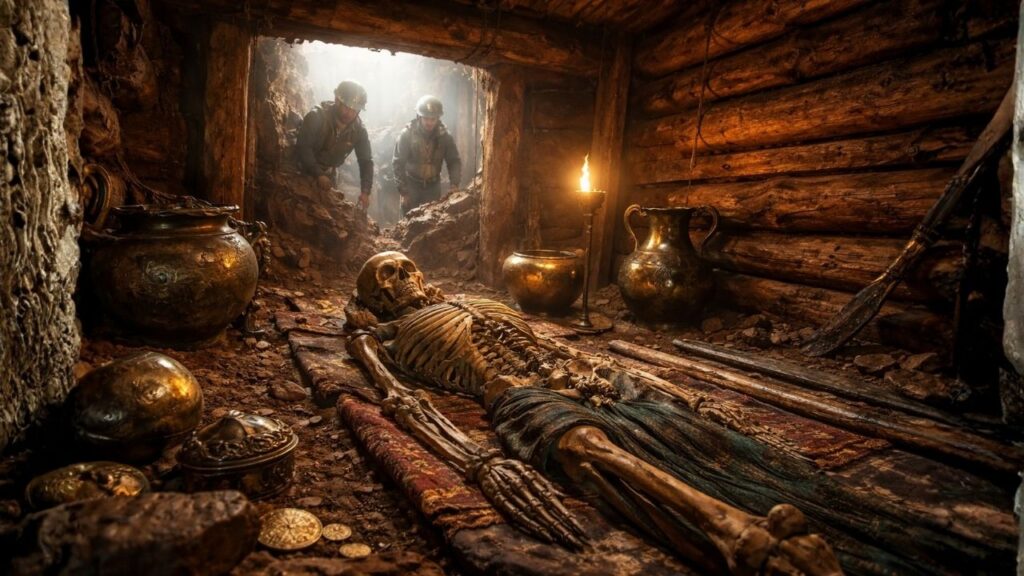
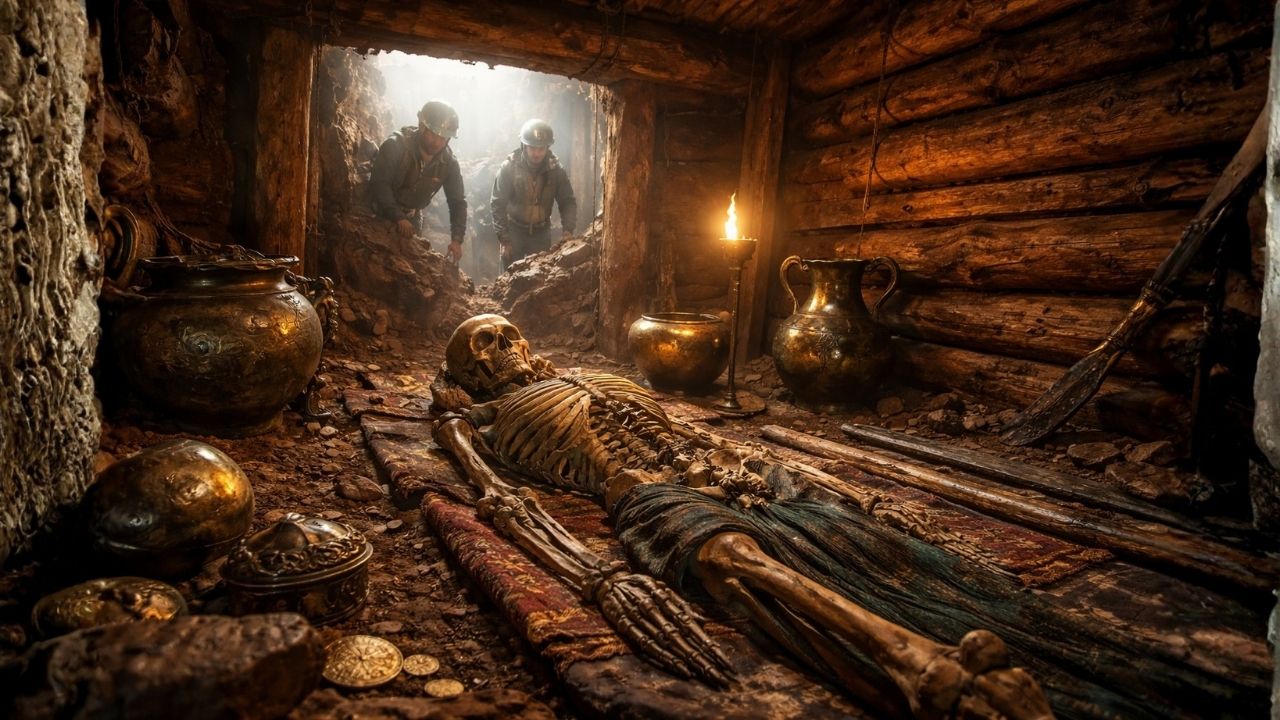
The burial site was hidden inside a massive earthen mound, rising nearly 20 feet high. While it looked unremarkable from the outside, excavations revealed a carefully constructed wooden chamber at its core—something rarely preserved over such a long period.

Inside, researchers discovered a collection of high-status objects, including bronze vessels, textiles, and finely crafted tools. These weren’t everyday items. They point to someone of significant importance—likely a member of the Celtic elite, possibly even a young ruler or “prince.”
The fact that the wooden structure survived at all is remarkable. Organic materials like wood typically decay over time, but here, conditions allowed it to remain largely intact, offering an unusually detailed snapshot of ancient craftsmanship.
A Tomb Touched by Looters—But Still Full of Clues
The burial mound wasn’t completely untouched. Over the centuries, looters attempted to break into the tomb, leaving behind signs of disturbance. Some artifacts were likely lost forever.

Yet despite this, the core structure remained surprisingly well preserved. This has allowed archaeologists to reconstruct much of the original burial setup and understand how the tomb was designed and used.
Even the damage tells a story. By studying the looting attempts, researchers can piece together how interest in such sites evolved over time—and how valuable these burials were considered, even in the distant past.
How Scientists Dated the Tomb So Precisely
One of the most impressive breakthroughs from this discovery comes from how accurately it was dated. Using dendrochronology—the study of tree rings—scientists analyzed the wooden beams used in the chamber.

This method allowed them to pinpoint the construction of the tomb to exactly 585 BCE.
That level of precision is rare in archaeology. It gives researchers a clear timeline and allows them to connect this burial to broader historical events happening across Europe at the time. It also reveals how advanced Celtic builders were in selecting and using timber.
Why This Burial Matters More Than It Seems
At the center of the tomb lies a powerful clue: the individual buried there was likely very young, possibly a teenager. Yet the scale and richness of the burial suggest immense status.

This challenges older assumptions about Celtic society. Rather than loosely organized tribes, this points to structured leadership systems—possibly hereditary rule—where power and status were passed down through family lines.
The artifacts also highlight a society that valued craftsmanship, symbolism, and social hierarchy. These weren’t isolated communities—they were culturally rich and technologically capable.
What This Discovery Reveals About Celtic Life
The items found inside the chamber tell a broader story about daily life and power in the Celtic world. Bronze vessels suggest feasting or ceremonial practices, while textiles hint at luxury and status.
Latest Stories
 Earth Was Once Turned Into a Fiery World by an Asteroid—Here’s What Scientists Are Discovering Now
The construction of the chamber itself reveals engineering skill and planning. Building a durable wooden structure inside a mound required knowledge of materials, environment, and long-term preservation—even if unintentionally.
Taken together, these elements paint a picture of a sophisticated society that was far more complex than earlier narratives suggested.
What Could Happen Next
This discovery is just the beginning. Archaeologists are continuing to analyze the site, and each new detail could refine—or even overturn—existing theories about early European civilizations.
Latest Stories
 Couple Finds Newborn Puppies Buried in Snow, Race Against Time Leads to Incredible Rescue Story
Future research may reveal where the materials came from, how trade networks operated, and how widespread this kind of elite burial practice was. There’s also the possibility of finding nearby sites connected to the same community.
In many ways, this single tomb could unlock an entire chapter of history that has remained largely hidden until now.
FAQs
1. What was discovered in southern Germany?
Archaeologists uncovered a 2,600-year-old Celtic burial chamber containing a wooden structure, artifacts, and the remains of a high-status individual.
Latest Stories
 Fishermen in France Discover Rare Blue Sea Spider Crab, Stunning Scientists and Prompting Urgent Marine Research Efforts
2. Why is this discovery important?
It provides rare, well-preserved evidence of Celtic elite life, social structure, and craftsmanship during a key period in European history.
3. How old is the burial chamber?
The chamber has been precisely dated to 585 BCE using tree-ring analysis.
4. Who was buried in the tomb?
The burial likely belonged to a young elite individual, possibly a teenage “prince,” based on the richness of the grave goods.
Latest Stories
 Evidence Found in China Reshapes Mars Research, Pushing Space Agencies to Reevaluate Search for Life Beyond Earth
5. Were the contents fully intact?
No, the site had been disturbed by looters in the past, but much of the wooden chamber and several artifacts remained preserved.
6. What makes the wooden chamber special?
Wood rarely survives over such long periods, making this one of the few opportunities to study ancient Celtic construction techniques in detail.
7. What will researchers study next?
Future work will focus on analyzing materials, understanding trade connections, and exploring whether similar burial sites exist nearby.
Latest Stories
 A 12,000-Year-Old Discovery in Turkey May Change What We Know About Early Human Belief