What if everything we thought we knew about the rise of civilization is backwards?
A newly uncovered human statue at Göbekli Tepe is raising exactly that question.
This 12,000-year-old site—already considered one of the oldest ritual complexes on Earth—has just revealed a rare human figure. And that single discovery is forcing scientists to reconsider a big idea: maybe belief didn’t follow civilization… maybe it helped create it.
What Was Just Discovered—and Why It Matters

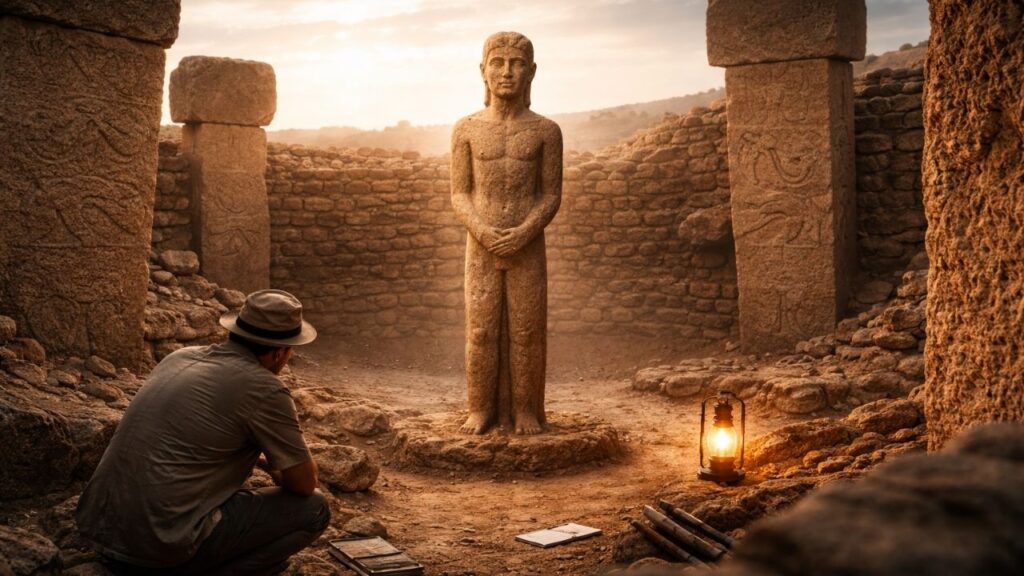
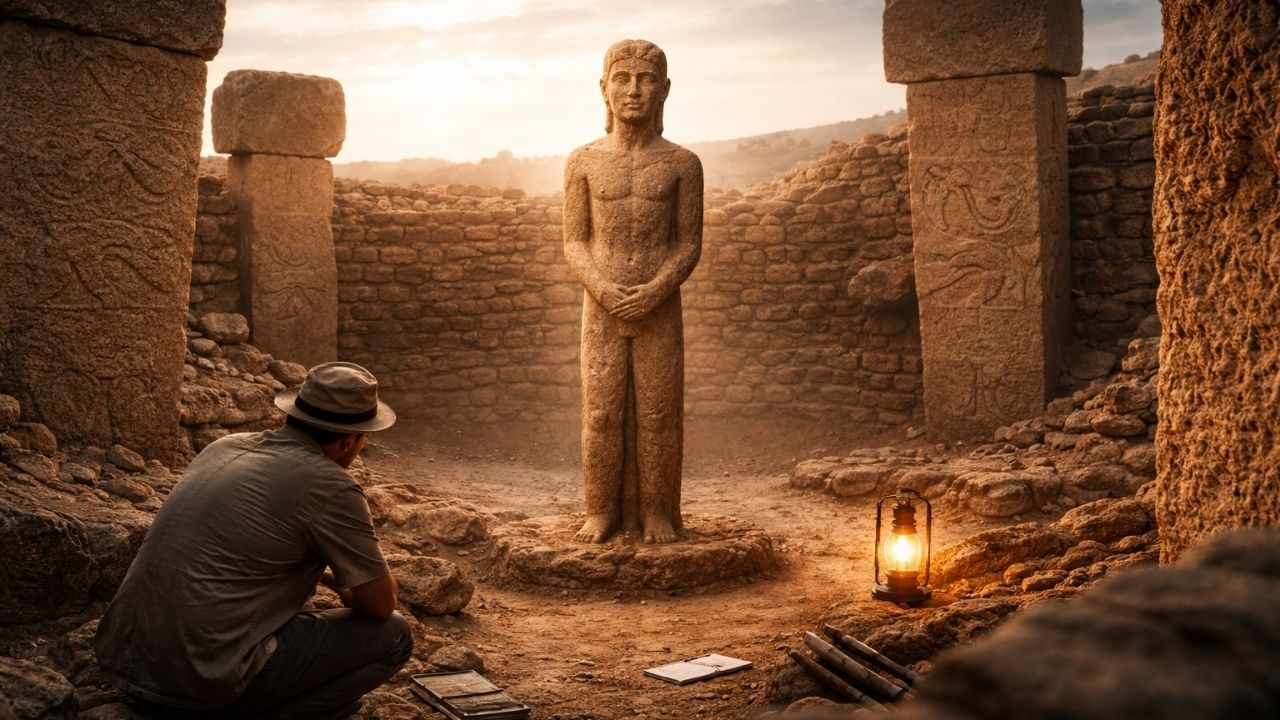
Archaeologists working at Göbekli Tepe recently uncovered a human statue unlike anything previously found at the site. While the area is famous for its detailed animal carvings, human representations are extremely rare.
Latest Stories
 Earth Was Once Turned Into a Fiery World by an Asteroid—Here’s What Scientists Are Discovering Now
This matters because it shifts the narrative. For years, researchers believed early humans first built settlements for survival—food, shelter, and safety—and only later developed religion. But this statue suggests something different: organized belief systems may have existed earlier than we thought, possibly bringing people together before cities even formed.
A Site That Breaks All the Rules
Göbekli Tepe has always puzzled researchers. Unlike typical ancient sites, there are no houses, no streets, and no graves. Instead, it’s filled with massive stone pillars arranged in circles, covered in carvings.
This unusual layout suggests the site wasn’t a village—it was a gathering place. People likely traveled long distances to meet here, possibly for rituals or ceremonies. That idea alone challenges long-held assumptions about early human life, showing that cooperation and shared beliefs may have been just as important as survival.
Latest Stories
 Couple Finds Newborn Puppies Buried in Snow, Race Against Time Leads to Incredible Rescue Story
Why This Human Statue Is So Important
The newly discovered statue stands out because it represents people—not animals. That might sound simple, but it’s a big deal in archaeology.
Most carvings at Göbekli Tepe focus on wildlife, which many believe had symbolic or spiritual meaning. A human figure, however, suggests self-awareness and identity. It hints that these early communities were not just observing nature—they were thinking about their place within it.
In other words, this could be early evidence of humans seeing themselves as part of something bigger, possibly even the beginnings of organized belief systems.
Latest Stories
 Fishermen in France Discover Rare Blue Sea Spider Crab, Stunning Scientists and Prompting Urgent Marine Research Efforts
Could Religion Have Come Before Cities?
This is where the discovery becomes truly groundbreaking. Traditionally, historians believed agriculture led to settlements, which then led to religion and social structures.
But Göbekli Tepe flips that idea. It suggests that shared beliefs may have brought people together first—motivating them to gather, cooperate, and eventually settle. If that’s true, then religion and ritual weren’t side effects of civilization—they were the foundation of it. And that changes how we understand human progress.
What Happens Next in Research
Scientists are now studying the statue in detail, along with the surrounding structures and carvings. The goal is to understand how it fits into the broader story of the site.
Latest Stories
 Evidence Found in China Reshapes Mars Research, Pushing Space Agencies to Reevaluate Search for Life Beyond Earth
Future excavations could reveal more human figures or clues about how rituals were performed. Researchers are also comparing Göbekli Tepe with other ancient sites to see if similar patterns exist.
If more evidence supports this theory, we may see a major shift in how textbooks explain the origins of society.
Why This Discovery Matters Today
This isn’t just about ancient history. It’s about understanding what brings people together. If belief systems played a key role in building the first communities, it highlights something deeply human: the need for shared meaning. Even today, culture, identity, and cooperation are often built around shared ideas—not just survival.

Göbekli Tepe reminds us that long before cities, governments, or economies, humans were already searching for connection and purpose.
Frequently Asked Questions
1. What is Göbekli Tepe?
Göbekli Tepe is a 12,000-year-old archaeological site in southeastern Turkey, believed to be one of the earliest known ritual or temple complexes built by humans.
2. Why is the human statue discovery important?
Because human figures are rare at the site, this find suggests early humans may have had a deeper sense of identity and belief than previously thought.
Latest Stories
 Detroit Red Wings Sign Jacob Bernard-Docker to Two-Year Deal, Prioritizing Defensive Stability Over Prospect Rotation
3. Does this mean religion came before cities?
Possibly. The site suggests that shared beliefs may have brought people together before permanent settlements were established.
4. How old is the discovery?
The statue dates back roughly 12,000 years, making it one of the oldest known human representations linked to ritual activity.
5. What makes Göbekli Tepe different from other ancient sites?
Unlike typical settlements, it has no homes or graves, indicating it was likely used purely for gatherings or ceremonies.
Latest Stories
 HBO Unveils First Harry Potter Series Teaser, Confirms 2026 Release as New Cast Steps Into Iconic Roles
6. What are scientists trying to learn now?
Researchers are studying how the statue fits into the site’s purpose and whether similar evidence exists elsewhere.
7. Could this change history books?
Yes. If confirmed, it could reshape our understanding of how civilization began—placing belief and cooperation at the center of human development.
Latest Stories
 Rain Interrupts Sheffield Shield Final After Victoria’s Fast Start Puts South Australia Under Pressure