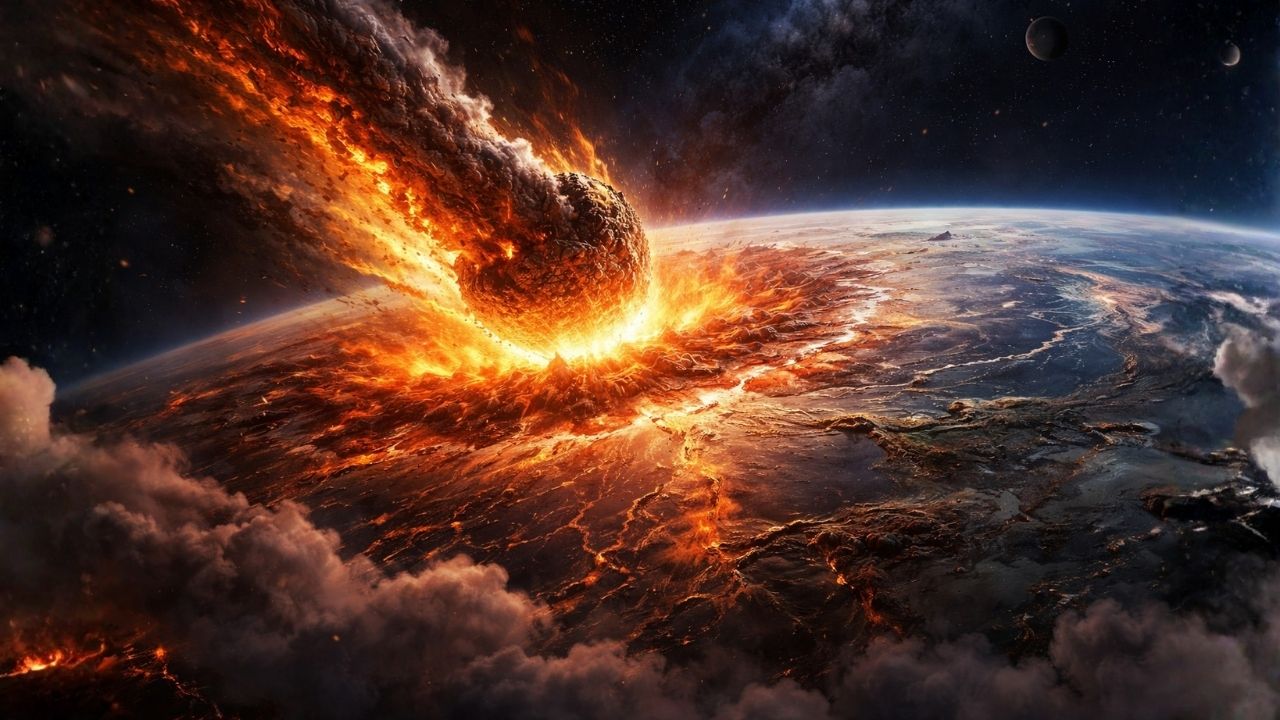
More than 3 billion years ago, Earth faced a disaster so extreme it could have wiped out everything. A massive asteroid—larger than a major city—slammed into the young planet, turning it into a hellish, boiling world. Oceans evaporated, skies darkened, and the surface became nearly uninhabitable. Yet somehow, life didn’t disappear. It adapted.
Now, scientists are uncovering how that moment may have helped shape life as we know it.
When Earth Became a Firestorm

The impact itself was beyond anything humans have ever witnessed. When the asteroid struck, it unleashed energy on a planetary scale. Molten rock shot into the atmosphere, creating a thick cloud that blocked sunlight. Temperatures soared, and large parts of the ocean may have boiled away.
Latest Stories
 King Charles and Prince William’s Joint Appearance Signals a Defining Moment for the Monarchy
For a time, Earth became almost unrecognizable—a hostile world dominated by heat, darkness, and chaos.
How Life Survived the Impossible
Despite the devastation, life found a way. Simple microorganisms, already present on Earth, proved remarkably resilient. These tiny life forms were able to survive extreme heat and harsh chemical conditions, adapting to an environment that would be deadly to most life today.
In fact, scientists now believe these extreme conditions may have helped certain types of life evolve faster, setting the stage for the complex ecosystems that came much later.

Rebuilding the Past With Modern Science
Understanding an event this ancient isn’t easy—but researchers are getting closer.
Using advanced computer models and geological evidence, scientists are reconstructing how the asteroid hit and what happened afterward. These simulations allow them to visualize shockwaves, atmospheric changes, and long-term environmental effects.
By piecing together these clues, researchers are building a clearer picture of how Earth recovered—and how life endured one of its greatest tests.

Why This Discovery Matters Today
This isn’t just about the past—it’s about the future. Studying how life survived such extreme conditions helps scientists understand how resilient life can be. It also offers clues about where life might exist beyond Earth, especially on planets with harsh environments.
At the same time, it’s a reminder of how powerful cosmic events can be—and how vulnerable our planet still is.
The Bigger Questions Scientists Are Still Exploring
Even with new discoveries, many questions remain. Scientists are still trying to understand exactly how long Earth took to recover and how deeply the impact influenced the evolution of life. There’s also growing interest in whether similar events could spark life on other planets. Each new finding adds another piece to the puzzle—but the full story is still unfolding.

A Reminder of Earth’s Fragility—and Strength
This ancient event shows two powerful truths at once. Earth is fragile. A single impact can transform the entire planet. But life is incredibly resilient. Even in the harshest conditions, it can survive, adapt, and grow.
That balance—between vulnerability and resilience—may be the most important lesson of all.
FAQs
1. When did this asteroid impact happen?
It occurred more than 3.2 billion years ago, during Earth’s early formation.

2. How big was the asteroid?
It was estimated to be extremely large—comparable to or larger than a major city.
3. What happened to Earth after the impact?
The planet experienced extreme heat, darkened skies, and possible ocean evaporation, creating a hostile environment.
4. Did life exist before the impact?
Yes, simple microorganisms likely existed and managed to survive the event.

5. How do scientists study such an ancient event?
They use geological evidence and computer simulations to reconstruct the impact and its effects.
6. Why is this discovery important today?
It helps scientists understand how life can survive extreme conditions and informs the search for life on other planets.
7. Could something like this happen again?
Large asteroid impacts are rare, but studying them helps scientists prepare for potential future threats.