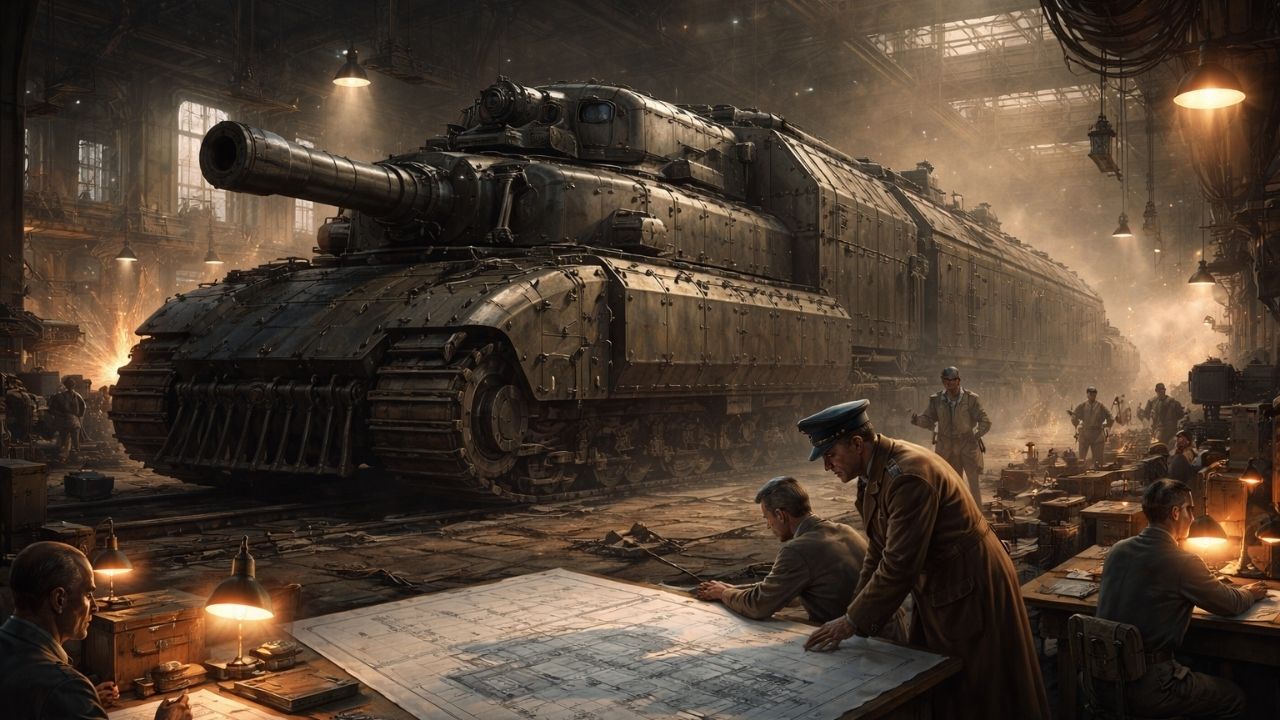
Imagine a weapon so massive it could roll across battlefields like a moving fortress—armed, armored, and nearly unstoppable. In the 1930s, that idea wasn’t science fiction. It was a serious military concept.
A French industrialist proposed a 60-ton armored assault train designed to dominate warfare. It had firepower, protection, and ambition. But despite all the excitement, it never moved beyond paper—and the reasons why reveal a lot about how modern warfare actually evolved.
The Vision: A Fortress on Rails

The concept came from Eugène Schneider, a key figure in France’s defense industry. His idea was bold: build a heavily armored train that could carry weapons, troops, and command systems—all in one moving unit.
Latest Stories
 Earth Was Once Turned Into a Fiery World by an Asteroid—Here’s What Scientists Are Discovering Now
Unlike earlier armored trains, this wasn’t just a support vehicle. It was meant to act as a self-contained combat platform. The design included a locomotive, a command center, and a heavily fortified fighting compartment packed with guns.
On paper, it looked like a game-changer. A machine that could protect soldiers while delivering powerful attacks from a mobile base.
Why the Idea Made Sense at the Time
To understand why this idea gained attention, you have to look at the era. Europe in the 1930s was preparing for another major conflict after the devastation of World War I.
Latest Stories
 Couple Finds Newborn Puppies Buried in Snow, Race Against Time Leads to Incredible Rescue Story
Military planners were experimenting with new ways to combine mobility and firepower. Tanks were evolving. Mechanized warfare was growing. Railways were still critical for logistics.
An armored train seemed like a natural step—something that could move quickly along tracks while carrying heavy weapons and thick armor. At the time, it didn’t seem unrealistic. It seemed innovative.
The Engineering Challenge Was Massive
Turning this idea into reality was a different story. A 60-ton train required an incredibly powerful engine and reinforced rail systems. Its armor—designed to withstand anti-tank fire—added even more weight. Engineers also had to figure out how to balance firepower, speed, and stability.
Latest Stories
 Fishermen in France Discover Rare Blue Sea Spider Crab, Stunning Scientists and Prompting Urgent Marine Research Efforts
There were also practical concerns. A train can only go where tracks exist. That limitation alone made it vulnerable compared to tanks, which could move across open terrain. In short, the more engineers worked on the idea, the more complex—and less practical—it became.
Why the Project Was Eventually Dropped
Despite initial interest, the French military decided not to pursue the project. The reasons were clear.
First, cost. Building such a massive machine would require huge investment at a time when resources were limited. Second, flexibility. Warfare was shifting toward faster, more adaptable vehicles like tanks.
Latest Stories
 Evidence Found in China Reshapes Mars Research, Pushing Space Agencies to Reevaluate Search for Life Beyond Earth
By the late 1930s, it was clear that mobility mattered more than size. Armored trains, no matter how powerful, couldn’t compete with the speed and versatility of modern armored units. As World War II approached, priorities changed—and the project quietly faded away.
What This Forgotten Idea Still Teaches Us
Even though the armored assault train was never built, it highlights an important moment in military history.
It shows how innovation often pushes boundaries before reality pulls things back. Not every bold idea becomes reality—but many help shape future thinking.
Latest Stories
 A 12,000-Year-Old Discovery in Turkey May Change What We Know About Early Human Belief
In this case, the failure of the concept reinforced a key lesson: in modern warfare, adaptability often beats sheer size and strength.
What Could Have Happened Next?
If the project had continued, it might have influenced early wartime strategies—especially in defensive operations or rail-based combat zones. But it’s unlikely it would have changed the overall direction of warfare.
Instead, the focus shifted toward tanks, aircraft, and mobile artillery—technologies that defined World War II and beyond.

Still, concepts like this continue to inspire modern military experimentation, especially in areas like autonomous vehicles and modular combat systems.
FAQs
What was the armored assault train concept?
It was a proposed 60-ton military train designed to act as a heavily armored, mobile combat unit with powerful weapons and command capabilities.
Who designed it?
The idea was developed by Eugène Schneider, a French industrialist involved in military manufacturing.
Latest Stories
 Detroit Red Wings Sign Jacob Bernard-Docker to Two-Year Deal, Prioritizing Defensive Stability Over Prospect Rotation
Why was it never built?
The project was considered too expensive, complex, and impractical compared to more flexible options like tanks.
How was it different from earlier armored trains?
It was designed as a fully self-contained combat system, not just a support vehicle with mounted weapons.
Could it have worked in real combat?
Technically, parts of it could have worked—but its reliance on tracks and massive size would have limited its effectiveness.
Latest Stories
 HBO Unveils First Harry Potter Series Teaser, Confirms 2026 Release as New Cast Steps Into Iconic Roles
Did similar ideas exist in other countries?
Yes, several countries experimented with armored trains, but none reached the scale or ambition of this concept.
What is the legacy of this idea today?
It remains an example of bold military innovation and a reminder that not all powerful ideas are practical in real-world conditions.
Latest Stories
 Rain Interrupts Sheffield Shield Final After Victoria’s Fast Start Puts South Australia Under Pressure