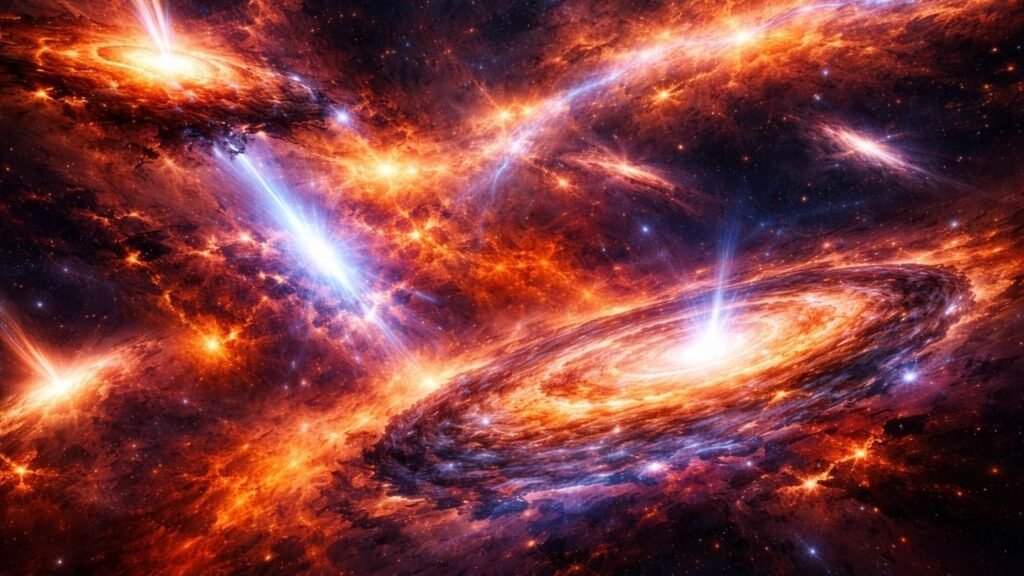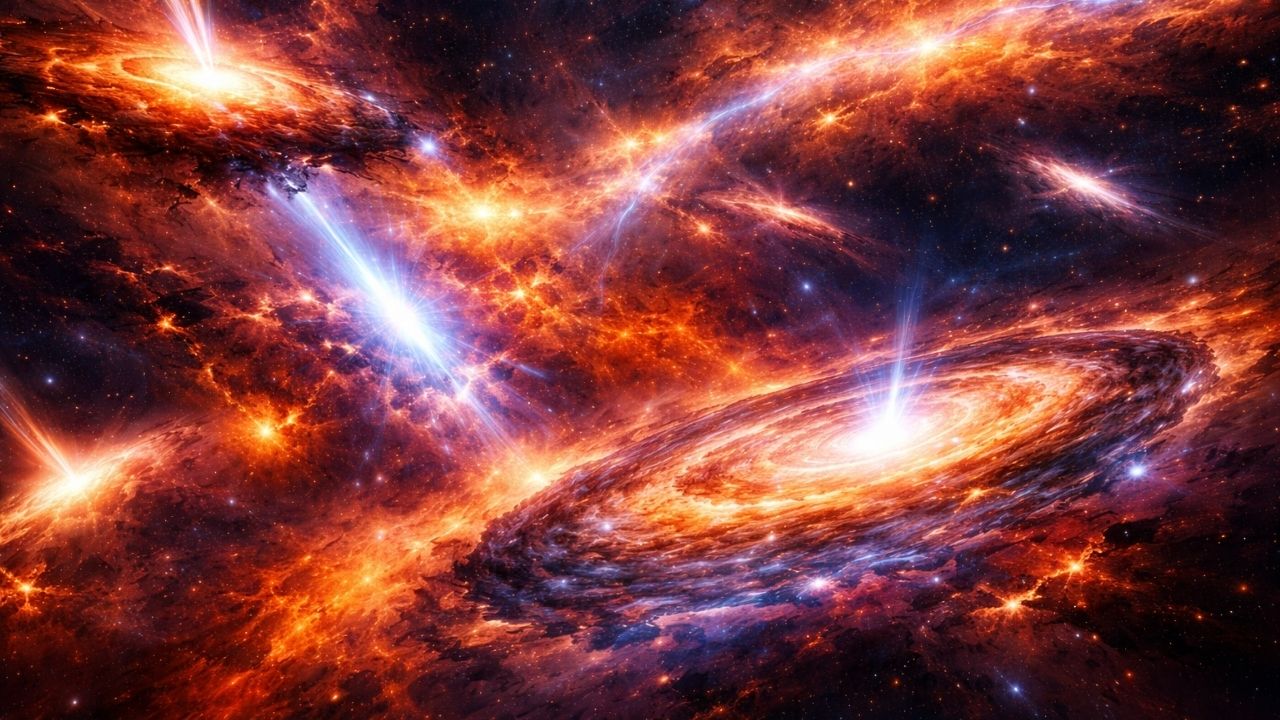
Something strange is happening in the oldest light we can see. Astronomers expected a young universe that was slowly cooling and settling into structure. Instead, they’re finding signs of extreme heat—gas so energized it looks like it’s “boiling” across vast cosmic regions.
This isn’t just a small mismatch. The data suggest the early universe was far more intense, chaotic, and energetic than current models predicted—and scientists are now racing to understand why.
What’s the New Discovery?
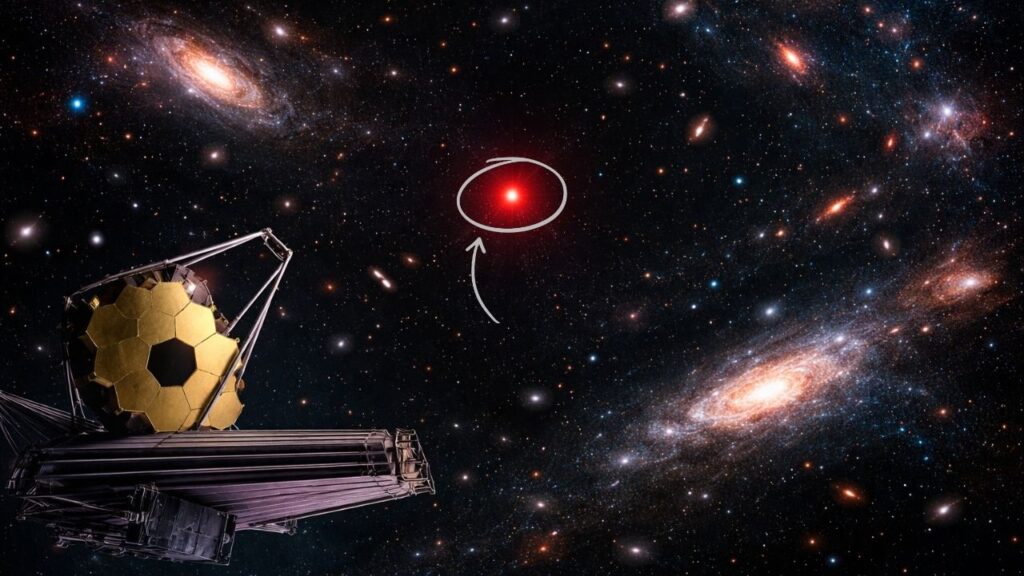
Recent observations of distant galaxies and intergalactic space—captured through advanced telescopes—show unexpectedly high temperatures in gas dating back to when the universe was less than a billion years old.
Latest Stories
 A Mysterious Interstellar Object Is Racing Toward Our Solar System—Here’s What Scientists Know
Instead of relatively cool, slowly forming structures, astronomers are detecting plasma heated to millions of degrees. These findings come from multiple signals, including X-rays, infrared data, and spectral fingerprints of elements that only appear under extreme conditions.
The update is simple but profound: parts of the early universe were already behaving like mature, high-energy systems long before they were supposed to.
Why This Is Surprising Scientists
For decades, the standard model of cosmology suggested a clear timeline: the universe started hot, then cooled, allowing gas to settle into stars and galaxies over time. Heat was expected to be localized—inside stars or around black holes—not spread across large regions so early.

But these new findings break that expectation. Instead of gradual development, the early universe appears to have accelerated processes happening far sooner and more violently than predicted. In simple terms, it’s like discovering fully grown cities in a place where only small villages should exist.
What Could Be Causing This Extreme Heat?
Scientists are exploring several possible explanations, but none fully solve the puzzle yet. One leading theory points to early supermassive black holes. These cosmic giants can release enormous energy as they consume matter, heating surrounding gas to extreme levels. If many of them formed earlier than expected, they could explain the widespread heating.
Another possibility involves massive cosmic shockwaves. As gas flows through the universe’s large-scale structure, collisions could generate intense heat—similar to shockwaves in explosions, but on a cosmic scale. Still, some regions don’t match either explanation, suggesting there may be missing physics or processes we don’t fully understand yet.

What the Data Is Really Showing
Scientists are comparing what they expected versus what they’re actually seeing:
- Models predicted early gas temperatures around 10,000 to 100,000 Kelvin
- Observations now show temperatures reaching millions of Kelvin
- These conditions appear across large regions, not isolated spots
This gap between theory and observation is what’s driving the excitement—and concern. It means something fundamental about early cosmic evolution may need to be revised.
Why This Matters Beyond Astronomy
This discovery isn’t just about distant galaxies—it affects our understanding of how everything formed, including our own galaxy and solar system.

The way gas behaves in the early universe determines how stars form, how galaxies grow, and how matter spreads across space. If that process was more violent than expected, it could change timelines for when structures formed and how they evolved.
In a deeper sense, this is part of our origin story. The same matter that once existed in those extreme conditions eventually became stars, planets, and life.
What Happens Next?
Scientists are now focusing on gathering more detailed data to confirm and explain these findings. Future observations will look at:

- More distant galaxies and gas clouds
- Higher-resolution temperature measurements
- Evidence of black hole activity or shockwaves
New telescopes and improved simulations will help determine whether this is a rare phenomenon—or a fundamental feature of the early universe we’ve overlooked until now.
If confirmed, this could lead to major updates in cosmology, similar to past breakthroughs like dark energy or black hole discoveries.
A Turning Point in Understanding the Cosmos
Moments like this are rare in science. When observations clearly disagree with long-standing models, it signals an opportunity—not a failure. Right now, astronomers are in that exact moment: the universe is revealing something unexpected, and the answers aren’t fully formed yet. What looks like a contradiction today may become tomorrow’s breakthrough.

Frequently Asked Questions (FAQs)
1. What does “boiling gas” in space actually mean?
It refers to extremely hot, energetic gas—plasma—reaching temperatures of millions of degrees, not literal boiling like water.
2. How did scientists detect this extreme heat?
They analyzed light across multiple wavelengths, especially X-rays and infrared, which reveal temperature through spectral signatures.
3. Why is this discovery important?
It challenges current models of how the universe evolved and could change our understanding of galaxy and star formation.

4. Does this mean current cosmology is wrong?
Not entirely. The overall framework still holds, but key details about early heating and structure formation may need revision.
5. Could black holes be responsible for this heat?
Possibly. Early supermassive black holes are a leading explanation, but they don’t fully explain all observations.
6. Is this phenomenon common in the early universe?
That’s still unclear. Scientists are studying more regions to determine whether this is widespread or rare.

7. Will future missions help solve this mystery?
Yes. Upcoming telescopes and better simulations are expected to provide clearer answers in the coming years.