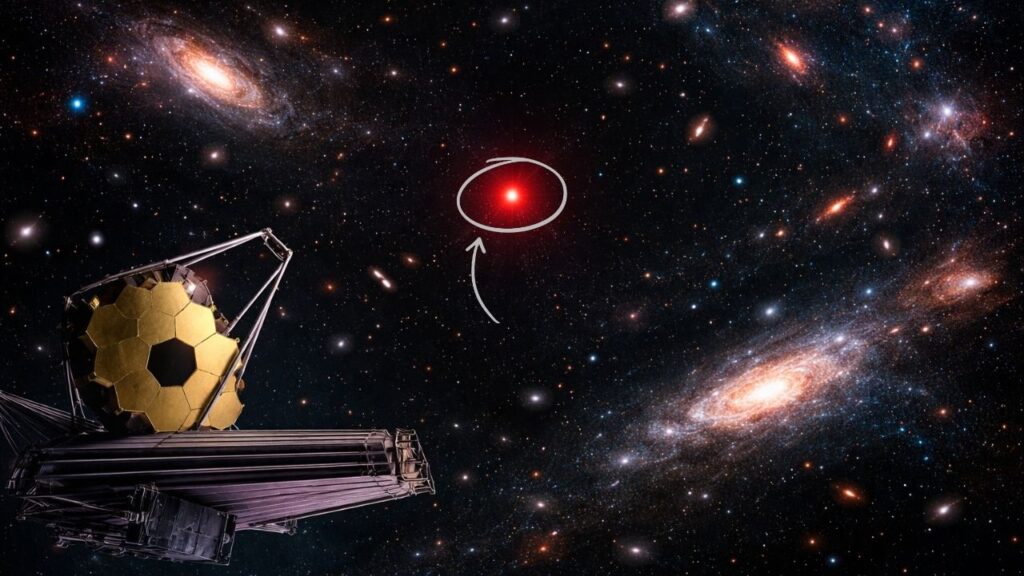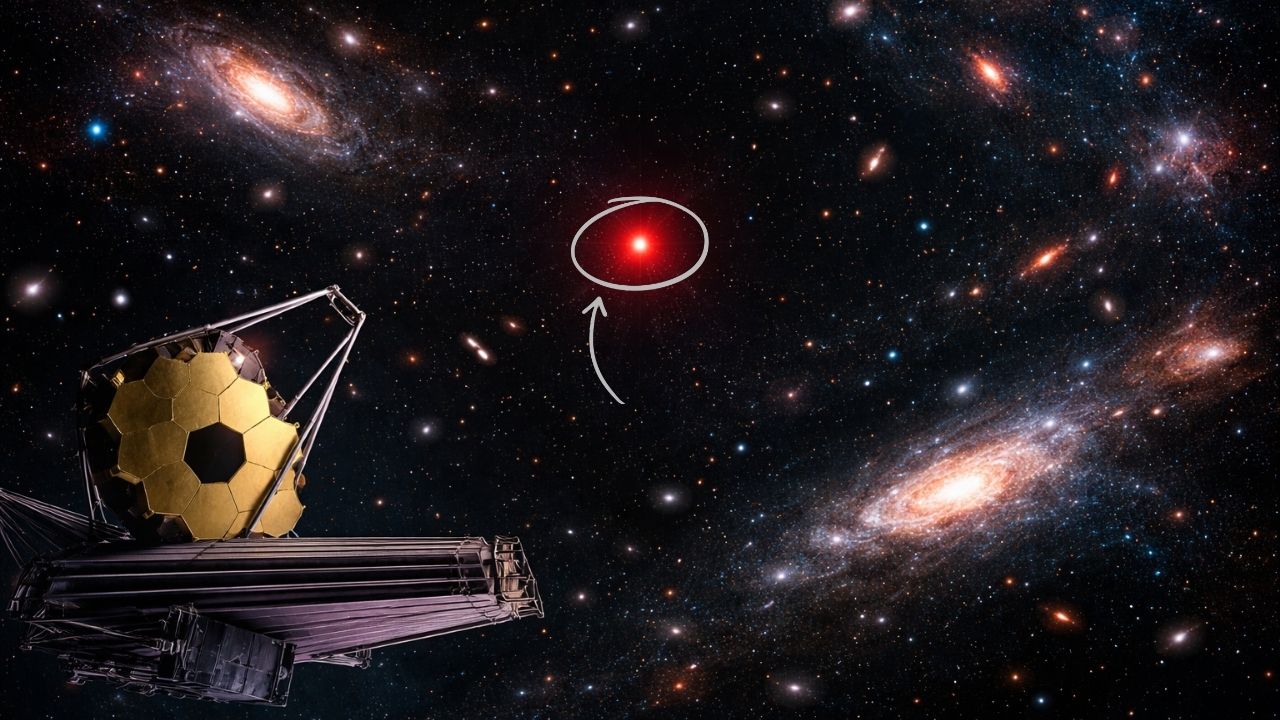
It started as something easy to ignore—a faint red dot buried in a sea of distant galaxies. No dramatic shape, no obvious structure, just a single pixel blinking on a scientist’s screen. But that tiny signal may represent something extraordinary: a possible new type of object from the early universe.
What makes this discovery so compelling is not how it looks, but what it suggests. If the data holds up, this small red speck could challenge long-standing ideas about how galaxies and black holes formed in the universe’s earliest days.
Why This Tiny Dot Matters So Much

At first glance, it’s just another distant object. But astronomers quickly realized something was off. The color of the dot—deep red—points to extreme distance through a concept known as redshift. In simple terms, the farther light travels, the more it stretches, shifting toward red.

That means this object may be over 13 billion light-years away. In other words, we’re seeing it as it existed when the universe was still in its infancy. Discoveries like this matter because they act like time machines, helping scientists understand how the first cosmic structures formed—and whether our current theories are missing something important.
A Cosmic Puzzle That Doesn’t Fit the Rules
Here’s where things get interesting. This object isn’t behaving like anything astronomers expected. It appears unusually compact, yet incredibly bright for its size and age.
That combination is hard to explain. Early galaxies were supposed to grow slowly over time, not appear fully formed and densely packed so early in cosmic history. This raises a big question: how did something this massive form so quickly?

Scientists are now considering possibilities that stretch current models—like ultra-dense early galaxies or rapidly growing black holes that evolved faster than expected.
Could This Be a New Type of Cosmic Monster?
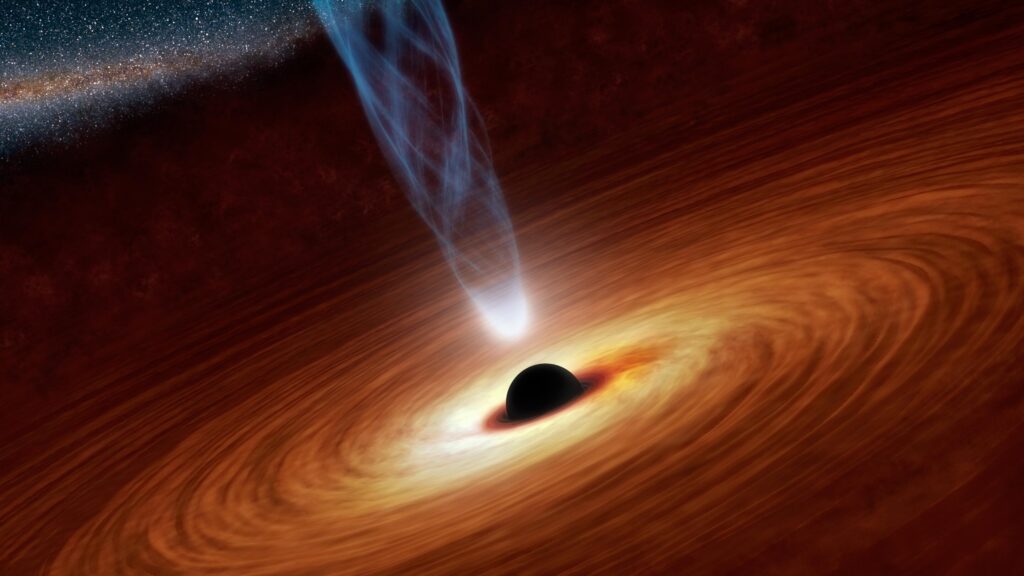
In astronomy, “monster” doesn’t mean scary—it means extreme. And this object fits that description perfectly. One leading theory is that it could host a rapidly growing supermassive black hole, possibly formed through a rare process called direct collapse.
If true, this would help explain one of astronomy’s biggest mysteries: how massive black holes appeared so early in the universe. Another possibility is that it’s a completely new class of object—something we’ve never seen before.

Either way, this tiny red dot may represent a major breakthrough hiding in plain sight.
What Scientists Will Do Next
Right now, excitement is balanced with caution. Astronomers need more data before making bold claims. The next step is spectroscopy—analyzing the object’s light in detail to confirm its distance and composition.
Multiple telescopes, both in space and on Earth, will study it across different wavelengths. Each observation adds another piece to the puzzle, helping researchers determine whether this is truly something new—or just a rare example of something we already know.

If confirmed, this discovery could force scientists to rethink how quickly structures formed after the Big Bang.
Why This Changes Our View of the Universe
Discoveries like this don’t just add information—they reshape understanding. For decades, scientists believed early galaxies and black holes grew gradually. But objects like this suggest the universe may have been building things much faster than expected.
That has ripple effects across cosmology. It could change how we think about dark matter, star formation, and even the timeline of the universe itself. Sometimes, the biggest breakthroughs come from the smallest signals.

The Bigger Picture: A Universe Full of Surprises
There’s something powerful about this moment. A single pixel—easily overlooked—has sparked questions that could rewrite parts of cosmic history.
It’s a reminder that science doesn’t move in straight lines. It advances through surprises, anomalies, and moments when reality refuses to match expectations. This red dot might be one of those moments.
FAQs
1. What exactly is this red dot in space?
It’s a distant object detected in deep-field telescope data. Its unusual brightness, compact size, and extreme red color suggest it could be something new or very rare.

2. Why is it red?
The redness is mainly due to redshift, caused by the expansion of the universe stretching light over billions of years.
3. Could this be a black hole?
Possibly. Scientists think it might contain a rapidly growing supermassive black hole, but more data is needed to confirm this.
4. How far away is this object?
Early estimates suggest over 13 billion light-years away, meaning we see it as it existed shortly after the Big Bang.

5. Why is this discovery important?
It challenges existing models of how galaxies and black holes formed, suggesting the universe may have evolved faster than we thought.
6. Could this just be an error or misinterpretation?
That’s always possible. Scientists are carefully verifying the data to rule out observational errors or alternative explanations.
7. What happens next?
Further observations using spectroscopy and additional telescopes will help confirm the object’s nature and significance.