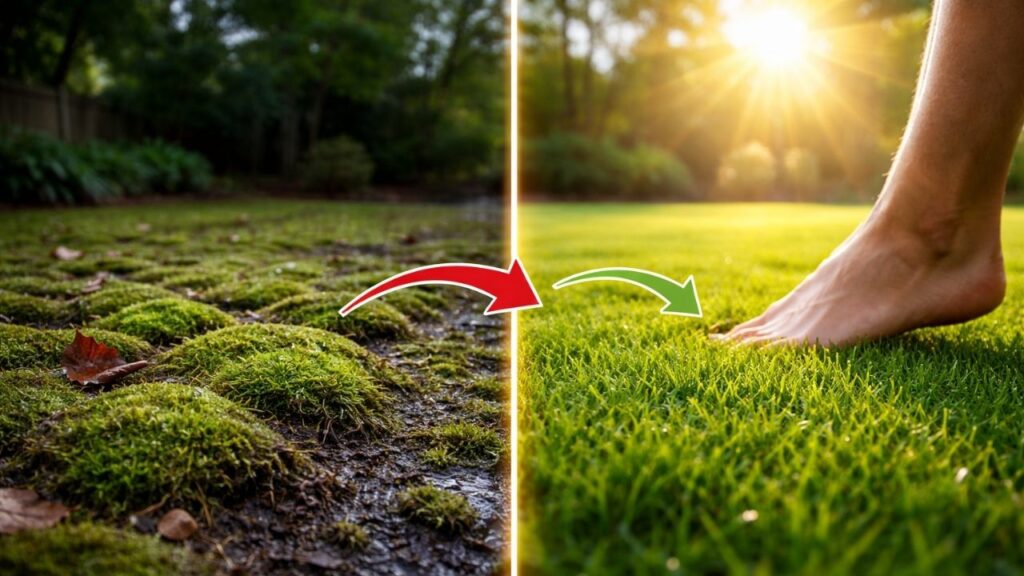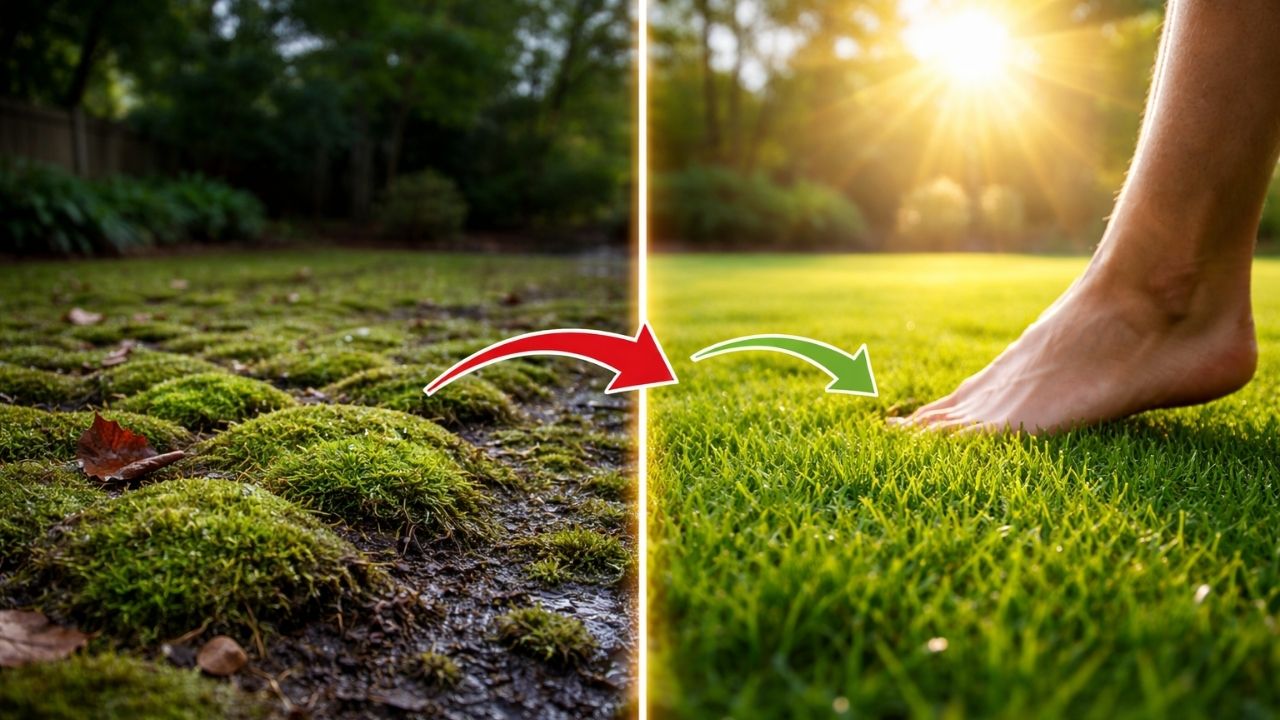
At first, it looks harmless—soft, green, even beautiful. You might even like it. But then it spreads. The grass thins, patches widen, and suddenly your lawn doesn’t look the way you imagined anymore.
Here’s the truth: moss isn’t the problem. It’s the signal. And if you understand what it’s telling you, you can fix your lawn naturally—and keep the moss from coming back.
Why Moss Appears in the First Place

Moss doesn’t invade healthy lawns. It settles where grass struggles.

If you’re seeing moss, your lawn is likely dealing with one or more of these:
- Poor drainage or constant moisture
- Compacted, hard soil
- Low nutrients
- Too much shade
- Slightly acidic conditions
Instead of treating moss like a weed to kill, it helps to think of it as feedback. Your lawn is showing you where conditions need improvement.
Step 1: Remove Moss Without Damaging Your Lawn
Before fixing the root problem, you’ll want to clear space for new grass to grow.

Gentle Raking Works Best
Use a spring-tine rake on a slightly damp day. Lightly pull the moss up without digging too deep into the soil. It should lift easily, almost like peeling back a layer.
This process might leave your lawn looking patchy—but that’s normal. Think of it as preparing the ground for recovery.
For Larger Areas
If moss is widespread, use a dethatching rake or manual scarifier. These tools help remove both moss and built-up debris that prevents healthy growth.

Step 2: Fix the Real Problem Underneath
This is where most people go wrong—they remove moss but ignore the cause.
Check Your Lawn Conditions
Walk around and observe:
- Are there soggy areas after rain?
- Is sunlight blocked for most of the day?
- Does the soil feel hard when you push into it?
These clues matter more than any quick fix.

Test Your Soil
A simple soil test can reveal:
- pH level (acidic or neutral)
- Nutrient deficiencies
This helps you make targeted, natural improvements instead of guessing.
Step 3: Improve Soil Health Naturally
Healthy soil is the key to long-term moss control.

Aerate to Loosen Compacted Ground
Use a garden fork or aerator to create small holes in the soil. This allows air, water, and nutrients to reach grass roots.
Compacted soil suffocates grass—but moss thrives in it.
Add Organic Matter
Spread a thin layer of compost over the lawn. This improves:

- Soil structure
- Drainage
- Microbial activity
Over time, this creates conditions where grass can compete again.
Adjust Soil pH if Needed
If your soil is too acidic, applying garden lime can help balance it. This makes the environment more favorable for grass and less ideal for moss.
Step 4: Rethink Light, Water, and Grass Type
Sometimes the issue isn’t maintenance—it’s mismatch.

Manage Shade
Trim tree branches to allow more light through. Even a small increase in sunlight can make a big difference.
If an area stays heavily shaded, consider alternatives like groundcovers instead of forcing grass to grow.
Water Smarter
Avoid frequent light watering. Instead:

- Water deeply
- Water less often
- Water in the morning
This encourages deep roots in grass, not surface conditions that moss prefers.
Choose the Right Grass
If you’re reseeding, use shade-tolerant or moisture-resistant grass blends that match your environment.
Step 5: Use Natural Moss Control (Optional Support)
These methods can help—but they’re not the main solution.

Mild Soap Solution
A diluted biodegradable soap spray can weaken moss, making it easier to remove. Always test a small area first.
Iron-Based Treatments
Natural iron products can suppress moss while supporting grass growth. Use them sparingly and alongside soil improvements.
What Happens Next: Long-Term Results
Once you fix the underlying conditions, something interesting happens—moss stops returning. Not because you killed it, but because your lawn no longer invites it. Grass grows thicker. Soil becomes softer and more balanced. Water drains better. And the lawn starts to maintain itself naturally.

A Smarter Way to Think About Your Lawn
You don’t need to eliminate every trace of moss. In some areas—especially shaded corners—it can actually work beautifully. The goal isn’t perfection. It’s balance. A healthy lawn isn’t one that fights nature—it’s one that works with it.
Frequently Asked Questions
1. Will moss go away on its own?
No. Moss will keep returning unless you fix the underlying conditions like poor drainage or compacted soil.
2. Is moss harmful to my lawn?
Moss doesn’t damage soil, but it replaces weak grass. It’s a sign your lawn needs improvement.
Latest Stories
 Scientists Warn Arctic Atmosphere Is Shifting Fast—Why Early February Could Trigger Extreme Weather Worldwide
3. What’s the fastest natural way to remove moss?
Raking it out is the quickest method, but lasting results come from fixing soil and light conditions.
4. Can I compost removed moss?
Yes. Add it to a compost pile or use it as mulch for acid-loving plants.
5. How long does it take to fix a moss problem?
You may see improvement in weeks, but full recovery usually takes a growing season.

6. Should I use chemicals to kill moss?
It’s not necessary. Natural methods combined with soil improvement are more effective long-term.
7. Is it okay to keep moss in some areas?
Yes. In heavily shaded or damp spots, moss can be a low-maintenance and attractive alternative to grass.