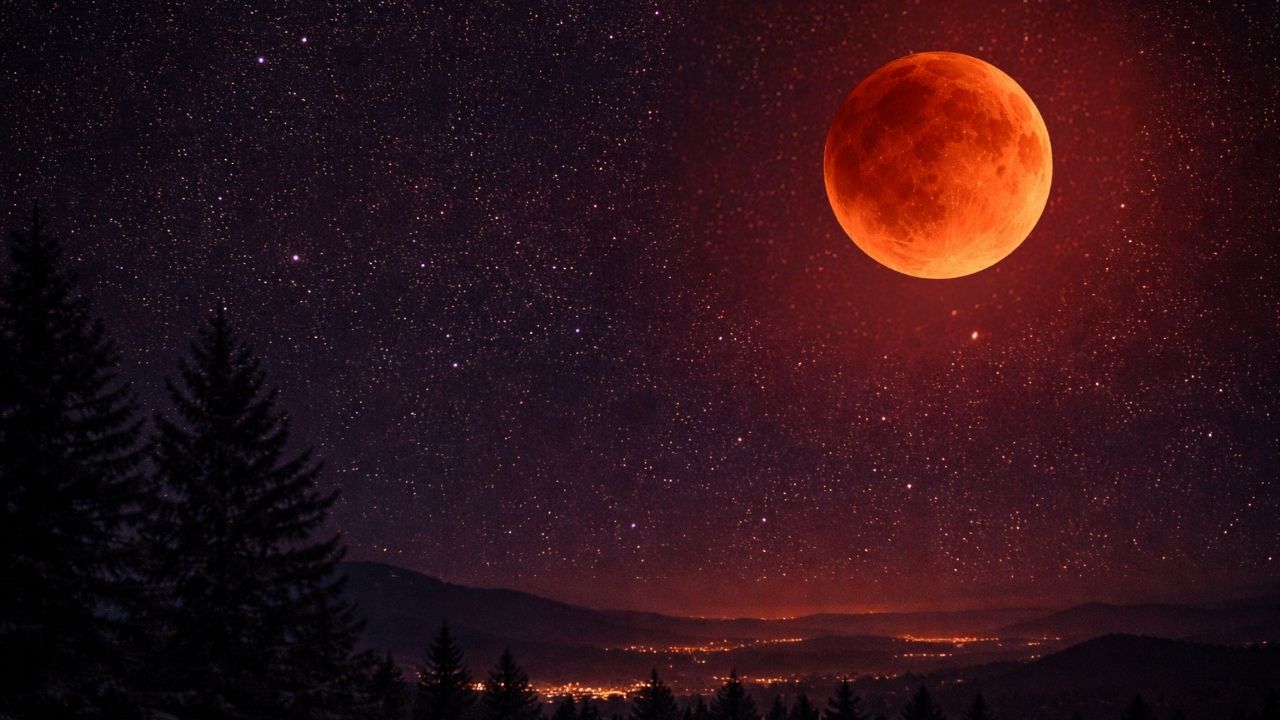
One night in early March, something unusual will happen above you. The familiar full moon will slowly darken… then glow deep red. For a few hours, the sky will feel different—quieter, older, almost surreal. This isn’t just another full moon. It’s a total lunar eclipse, and it’s one of the easiest and most fascinating sky events you can watch with your own eyes.
What’s Happening: A Simple Explanation
A total lunar eclipse occurs when the Sun, Earth, and Moon align perfectly. Earth moves directly between the Sun and the Moon, casting a massive shadow into space—and the Moon passes right through it.
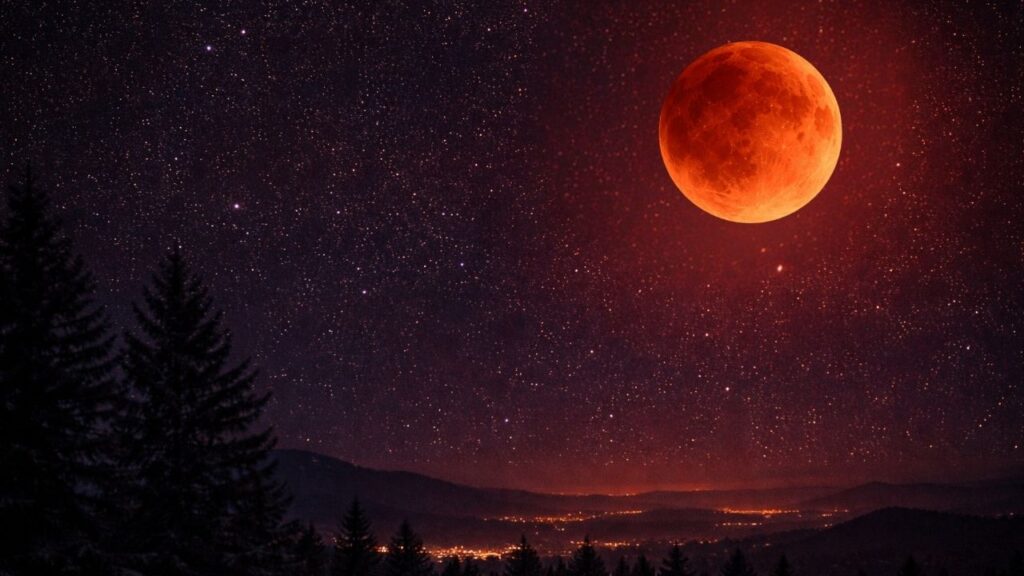
At first, you’ll notice a small dark “bite” on the moon’s edge. Slowly, that shadow grows until the entire moon is covered. But instead of disappearing, it transforms. That’s when the magic happens—the Moon turns red.
Why the Moon Turns Red (It’s Not What You Think)
The red color doesn’t come from the Moon itself. It comes from Earth. As sunlight passes through Earth’s atmosphere, most of the blue light gets scattered away. What remains are the red and orange tones—similar to what you see during sunrise and sunset.
That filtered light bends around Earth and reaches the Moon, bathing it in a copper or reddish glow. What you’re actually seeing is every sunrise and sunset on Earth projected onto the Moon at once.
Why This Eclipse Matters
This isn’t just a visual event—it’s a reminder of how connected everything is. You’re watching sunlight travel through Earth’s atmosphere, reflect off the Moon, and return to your eyes. It’s a real-time demonstration of how our planet, atmosphere, and space all interact.

It also offers something rare in today’s fast world: a slow, shared experience. The eclipse unfolds over hours, not seconds. You can step outside, look up, and feel part of something bigger.
What Makes March’s Eclipse Special
Early March sits right on the edge of seasonal change. Winter is fading, and spring is just beginning to show signs of life.
Seeing a red moon during this time adds another layer of meaning. Traditionally, this full moon is called the Worm Moon or Sap Moon—marking thawing ground and rising life. Now imagine that same moon turning red. It feels like a signal: a shift is happening, both on Earth and above it.

What You’ll See Step by Step
The eclipse doesn’t happen all at once. It’s a gradual transformation:
- The moon starts bright and full
- A shadow slowly appears on one side
- The shadow spreads across the surface
- The moon turns red during totality
- Light gradually returns
The most striking phase—when the moon is fully red—can last up to an hour or more, depending on your location.
How to Watch It (No Equipment Needed)
You don’t need anything special to enjoy this event. Just step outside and look up. That’s it. For a better experience:

- Find a spot with a clear view of the sky
- Avoid bright city lights if possible
- Dress warmly and stay a while
- Bring binoculars if you have them, but they’re optional
Unlike solar eclipses, this is completely safe to watch with your eyes.
What Could Happen Next
Events like this are becoming more popular as people reconnect with the night sky. More viewers, more shared moments, and more awareness of how dynamic our universe really is.
It’s also a reminder to slow down. The eclipse won’t last forever, but the memory will. And once you’ve seen a red moon, you’ll never look at the night sky the same way again.
Frequently Asked Questions
1. Why does the moon turn red during a lunar eclipse?
Because sunlight passes through Earth’s atmosphere, which filters out blue light and allows red tones to reach the Moon.
2. Is a “Blood Moon” dangerous?
No. It’s a completely natural and harmless astronomical event.
3. Do I need special glasses to watch it?
No. Unlike solar eclipses, lunar eclipses are safe to view with the naked eye.

4. How long does the red moon last?
The total phase can last anywhere from about 30 minutes to over an hour, depending on location.
5. Will the color always look the same?
No. The shade of red can vary based on atmospheric conditions like dust, pollution, or volcanic activity.
6. Can I photograph the eclipse with my phone?
Yes, but results may vary. A tripod or steady surface will help capture clearer images.

7. What if it’s cloudy?
If the sky is cloudy, the eclipse won’t be visible from your location—but it will still be happening above the clouds.