It starts with a strange quiet. Birds stop mid-call, shadows sharpen, and the light turns metallic—like the world has slipped out of place. Then, in seconds, the Sun vanishes. Not dimmed. Not filtered. Gone.
This isn’t science fiction. Scientists have already mapped a future total solar eclipse so long and rare that it’s being called the “eclipse of the century.” And while it won’t happen tomorrow, it’s already changing how astronomers—and even everyday people—think about time, nature, and our place in the universe.
What’s the Big Update—and Why It Matters
The headline is simple but staggering: on July 16, 2186, Earth will experience one of the longest total solar eclipses in recorded history, with total darkness lasting nearly six minutes on land and up to seven minutes over the ocean.
That might not sound huge at first—but most eclipses last just 2 to 4 minutes. This one pushes the limits of what’s physically possible. It’s rare, predictable centuries in advance, and powerful enough to turn an ordinary day into something unforgettable.
Why it matters now is just as important. Events like this remind scientists—and all of us—that Earth is part of a precise cosmic system. And even if we won’t all see it, this eclipse is a marker in time, a future moment humanity is already preparing for.
Why This Eclipse Will Be So Unusually Long
Not all eclipses are created equal. Their duration depends on a very specific alignment between the Sun, Moon, and Earth.

For this event, everything lines up perfectly. The Moon will appear slightly larger because it’s closer to Earth, while Earth will be positioned just far enough from the Sun to make the shadow stretch longer. Add to that the path of the shadow crossing Earth at just the right angle, and you get a rare result: extended totality.
In simple terms, the Moon’s shadow will move more slowly across the surface, giving people underneath it more time in darkness. That’s what turns a typical eclipse into something extraordinary.
Where the Shadow Will Fall
The path of totality will sweep across parts of northern South America and then move out over the Atlantic Ocean. Only people inside this narrow path will experience full darkness—everyone else will see a partial eclipse.

Regions expected to witness the longest totality include northern Brazil, Guyana, and Suriname. The absolute peak—close to seven minutes—will occur over open ocean. This matters because location is everything. Even being slightly outside the path means missing the full experience entirely.
What Nearly Six Minutes of Darkness Feels Like
Most people who’ve seen a total solar eclipse describe it as surreal. But a long eclipse like this changes the experience entirely.
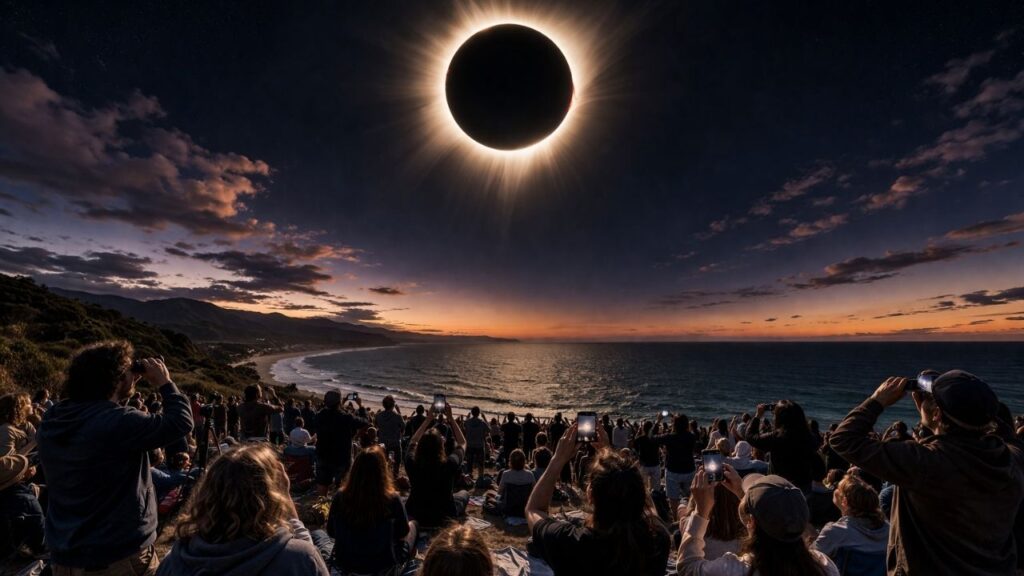
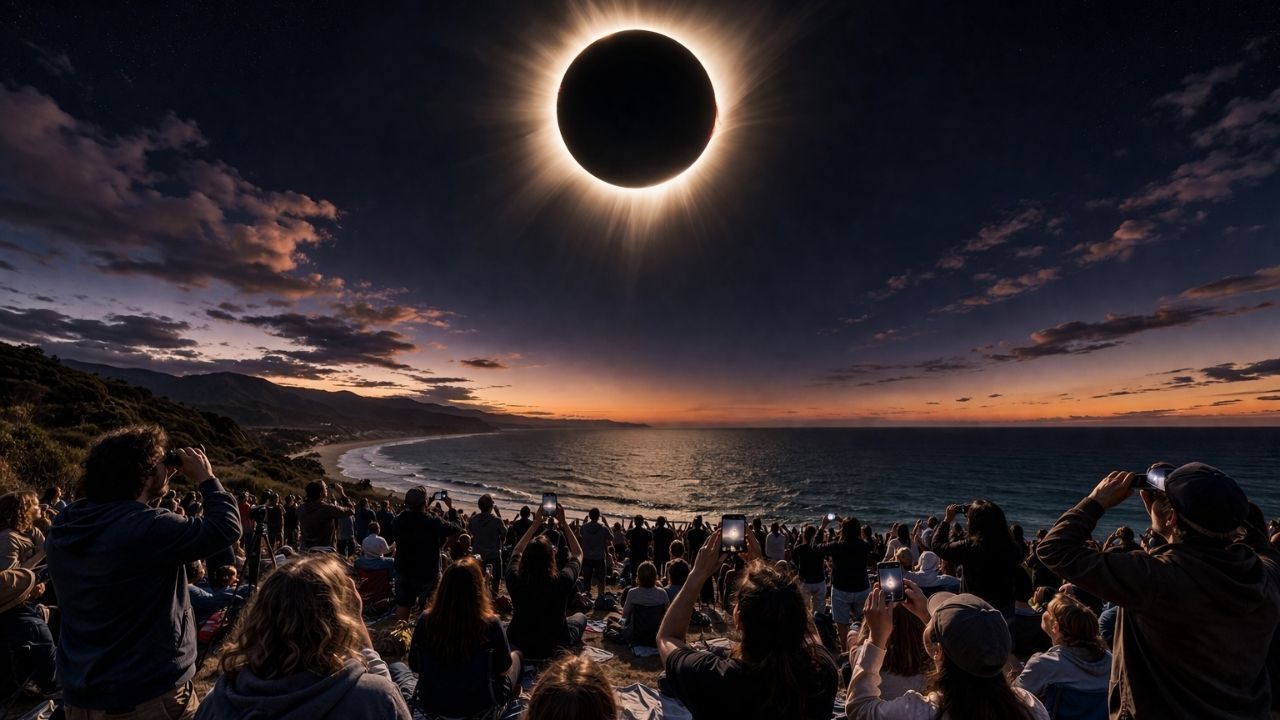
Instead of rushing to take it all in, you actually have time to absorb it. The temperature drops. The sky darkens into twilight. Stars and planets appear in the middle of the day. The Sun’s outer atmosphere—the corona—becomes visible, stretching like glowing strands into space.

And then there’s the emotional side. People often go silent. Some cry. Others laugh in disbelief. It’s not just something you see—it’s something you feel. With nearly six minutes, that feeling lingers. It becomes less of a moment and more of an experience.
Why People Are Already Talking About It
Even though 2186 feels far away, this eclipse has become a reference point for astronomers and eclipse enthusiasts. It represents the extreme edge of what nature allows.
For scientists, it’s an opportunity. Longer eclipses mean more time to study the Sun’s corona, space weather, and atmospheric changes on Earth. For future generations, it will likely become a global event—something people travel across continents to witness.
And for everyone else, it’s a reminder that not everything important is immediate. Some moments are written far ahead, waiting.
What Could Happen Next
As awareness grows, events like this are shaping how we think about long-term science and global experiences. Future cities along the path may prepare for tourism. Researchers may design experiments decades in advance.
More importantly, it highlights how predictable—and yet awe-inspiring—our universe is. We can calculate this event down to the second, yet the experience itself remains deeply human and emotional.

Why This Isn’t Just About an Eclipse
At its core, this story isn’t just about darkness in the middle of the day. It’s about perspective. The Sun, something we take for granted every day, can disappear. The Moon, usually quiet and distant, can completely block a star. And Earth is just the stage where this happens. That realization changes how people see the sky—and sometimes, how they see everything else.
FAQs
When will this long solar eclipse happen?
The eclipse is predicted for July 16, 2186, with totality lasting up to nearly seven minutes in some areas.
Why is this eclipse longer than most?
It’s due to a rare alignment where the Moon appears larger, Earth is slightly farther from the Sun, and the shadow crosses Earth at an optimal angle.

Where will it be visible?
The path of totality will cross parts of northern South America and the Atlantic Ocean. Only locations within this path will see full darkness.
Can people alive today see it?
Most people alive today won’t, but future generations will. The event is already being studied and mapped in detail.
What happens during totality?
The Sun is completely covered, the sky darkens, temperatures drop, and the solar corona becomes visible. Stars and planets may also appear.

Is it safe to look at a solar eclipse?
Only during full totality is it safe to look without protection. At all other times, proper eclipse glasses or filters are required.
Why do people travel to see eclipses?
Because total solar eclipses offer a rare, emotional, and unforgettable experience that photos or videos can’t fully capture.