The news didn’t arrive with noise or drama. There were no explosions, no bright flashes in the sky. Instead, it appeared quietly—hidden inside lines of data and faint dots captured by telescopes. But what those tiny signals revealed left scientists stunned.
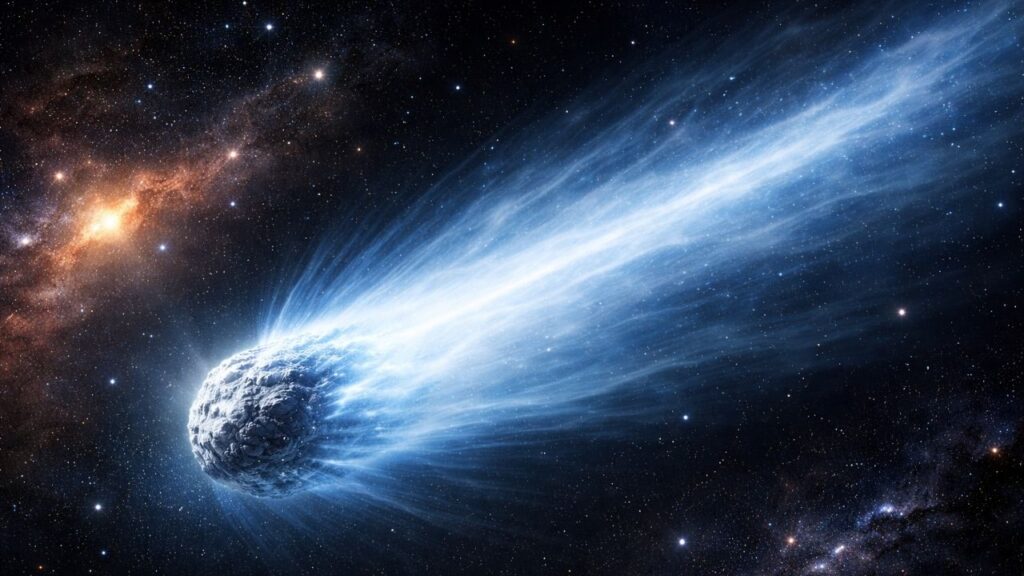
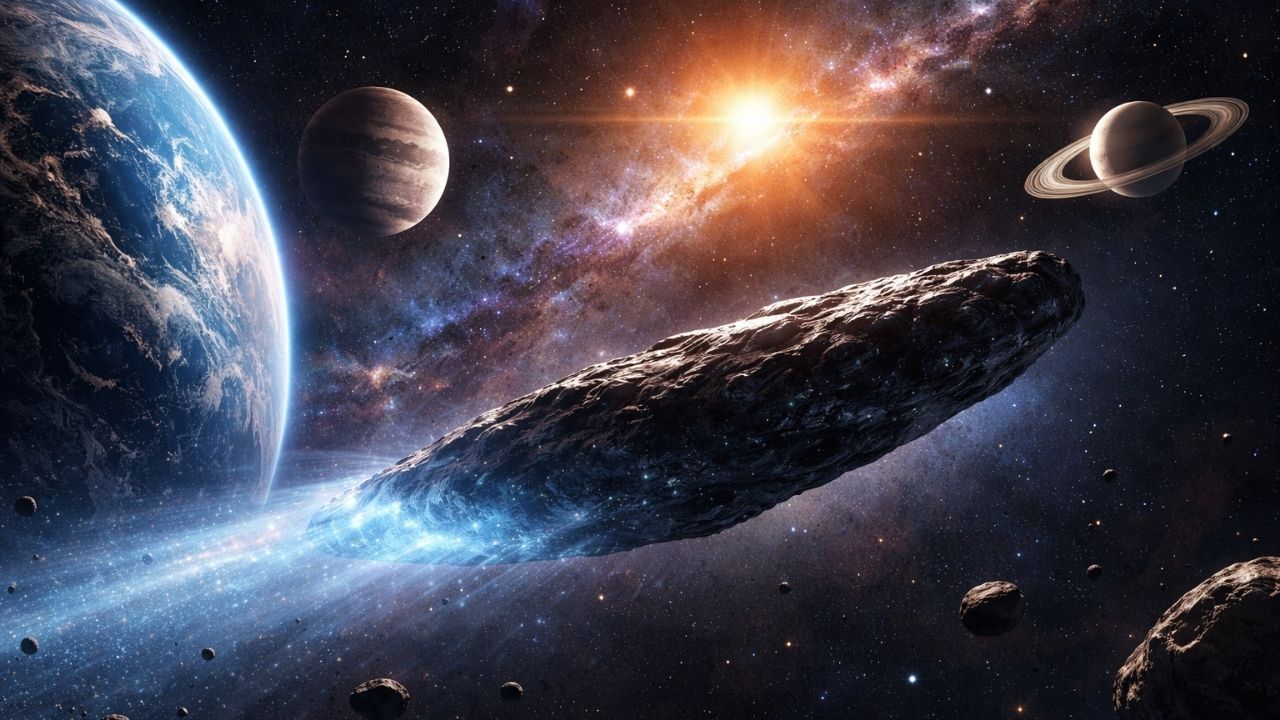
Astronomers have detected a mysterious object speeding toward our solar system, and what makes it extraordinary is its origin. This object is not from our solar system. It comes from somewhere far beyond—from another star system. A true cosmic traveler, now passing through our neighborhood.
A Visitor That Won’t Stay

Most objects in space follow predictable paths. Planets orbit the Sun in stable patterns. Comets return after long journeys. Even asteroids move along known routes that scientists can track. But this object is different.
Latest Stories
 Scientists Capture 8 Incredible Images of Interstellar Comet Passing Through Our Solar System
It is moving on a hyperbolic trajectory, meaning it is not bound to the Sun’s gravity. It isn’t here to stay. It is simply passing through—entering our solar system briefly before continuing its journey into deep space.
We have seen interstellar visitors before, like ‘Oumuamua (2017) and Borisov (2019). But this new object is even more extreme. Early data suggests it is moving at incredibly high speeds—faster than most objects ever observed on such a path.
To put it simply, it is racing through space at tens of kilometers per second—far beyond anything humans can imagine experiencing.

The Moment Everything Changed
The discovery began like many others—in a quiet observatory, with scientists scanning through images of the night sky. Most of the stars stay fixed, but occasionally, something moves. That’s what caught their attention.
A faint point of light shifted slightly between images. At first, it seemed routine—perhaps a small asteroid or distant comet. But when scientists began calculating its orbit, something didn’t add up.
The numbers didn’t fit. No matter how they adjusted their models, the result stayed the same: the object was not orbiting the Sun. Instead, it was moving too fast and on a path that clearly originated from outside our solar system. After multiple checks and confirmations, the conclusion became undeniable—this was a true interstellar object.

What Could This Object Be?
Right now, the object appears as nothing more than a faint dot. But scientists are already forming theories about its nature.
It could be:
- A comet-like body, made of ice and dust, which may develop a glowing tail as it approaches the Sun
- Or an asteroid-like object, rocky and silent, reflecting only a small amount of light
If it behaves like a comet, we might soon see dramatic changes—gas jets, glowing clouds, and a visible tail. If it is more like an asteroid, it may remain dark and quiet, offering only subtle clues about its structure.
Latest Stories
 Meteorologists warn overnight snowfall could reach historic levels, as officials discourage travel
Either way, it carries something incredibly valuable: material from another star system.
A Race Against Time
One of the biggest challenges with interstellar objects is their speed. They move so quickly that scientists have only a limited time to study them.
Once confirmed, observatories around the world begin working urgently:

- Telescopes are redirected
- Observation schedules are changed
- Scientists collaborate across countries and time zones
Every moment matters. As the object moves closer, it becomes brighter—but also moves faster, meaning it will soon disappear again into space.
There is even discussion—though highly challenging—about sending a spacecraft to study it up close. However, matching the speed of such an object is extremely difficult with current technology.
What Scientists Can Learn
Even without a spacecraft, scientists can learn a lot by studying how the object behaves. By analyzing its light, they can determine:

- Its chemical composition
- Whether it contains water, ice, or organic molecules
- Its surface properties and structure
This makes the object incredibly valuable. It is like a natural sample from another solar system, delivered to us without needing a mission.
It offers rare insight into how planets and systems form elsewhere in the galaxy.
Is There Any Danger?
Whenever something is described as “racing toward us,” people naturally worry. But scientists are clear: there is no threat to Earth.

The object will pass through the solar system at a safe distance. Its path is dramatic, but not dangerous. It will simply swing through and continue its journey into the depths of space.
A Reminder of Our Place in the Universe
This discovery is more than just a scientific event—it’s a powerful reminder. Our solar system is not isolated. We exist in a galaxy full of movement, debris, and wandering objects. Some of these travelers cross unimaginable distances, and occasionally, one passes close enough for us to detect.
It changes how we see the universe. We are not alone in a static system—we are part of a dynamic, interconnected cosmic environment.

Could This Be Linked to Life?
One fascinating possibility is the role such objects might play in spreading the building blocks of life.
Some scientists believe that organic molecules—or even primitive life components—could travel on comets and asteroids between star systems. While this idea is still debated, interstellar objects like this provide a chance to test such theories.
Even if no life exists on them, they may carry the ingredients needed for life, offering clues about how life begins elsewhere.
Latest Stories
 2026 Toyota Corolla Pickup: The Compact Truck That Could Change Urban Driving Forever
The Sky Feels Different Now
If you look up at the night sky tonight, nothing will seem different. The stars will shine as they always do. But now, there’s something new to imagine.
Somewhere out there, a small object from another star system is passing through our cosmic neighborhood. Silent, fast, and mysterious. It reminds us that space is not empty—it is alive with motion, history, and connections we are only beginning to understand.
A Brief Visit, A Lasting Impact
This object will not stay long. In a matter of months or years, it will leave our solar system forever, disappearing into the darkness. But the impact of its discovery will remain. Scientists will study the data for years. New theories will emerge. And perhaps most importantly, it will inspire further exploration.

Because every interstellar visitor tells us something new—not just about distant worlds, but about our own place in the universe. This discovery brings together two powerful emotions: scientific curiosity and human wonder. A tiny dot in the sky has reminded us of something profound— The universe is not only vast… it is active, connected, and full of surprises we have yet to fully understand.