A bright fireball lit up the morning sky over the Midwest—and seconds later, a powerful boom shook homes across Ohio. What looked like a fleeting spectacle may have left something much more lasting behind: rare meteor fragments that could now be scattered across neighborhoods.
Scientists say this wasn’t just another shooting star. It was a sizable space rock breaking apart with explosive force—and now, both researchers and residents are on the lookout for pieces of it.
What Happened in the Sky Over Ohio?

On the morning of March 17, a meteoroid weighing around 7 tons slammed into Earth’s atmosphere at high speed. As it tore through the air, it created a blazing fireball visible even in daylight—an unusually rare event that quickly caught attention across the region.

The object didn’t make it to the ground intact. Instead, it fragmented midair with energy comparable to about 250 tons of TNT. That sudden breakup created shockwaves, which is why so many people across northern Ohio reported hearing a loud sonic boom and feeling vibrations in their homes.
More than 200 eyewitnesses reported the event, helping scientists piece together what happened—but the exact details are still being refined.
Where Did the Meteor Fragments Land?
Initial data suggests the meteor broke apart somewhere between Akron and Canton, with possible fragments falling around Medina County. However, experts caution that these estimates aren’t precise.

The trajectory is based largely on eyewitness reports, which can vary in accuracy. Small errors in direction or timing can shift the predicted landing area by miles. In other words, the debris field could be wider than expected—and not limited to one specific town.
That uncertainty is part of what makes this event so intriguing. It also means the search area is broad, increasing the chances that someone might stumble upon a fragment without even realizing it.
What Do Meteorite Pieces Look Like?
While the original space rock was about 6 feet wide, the fragments that may have reached the ground are much smaller—typically just 1 to 2 inches across.

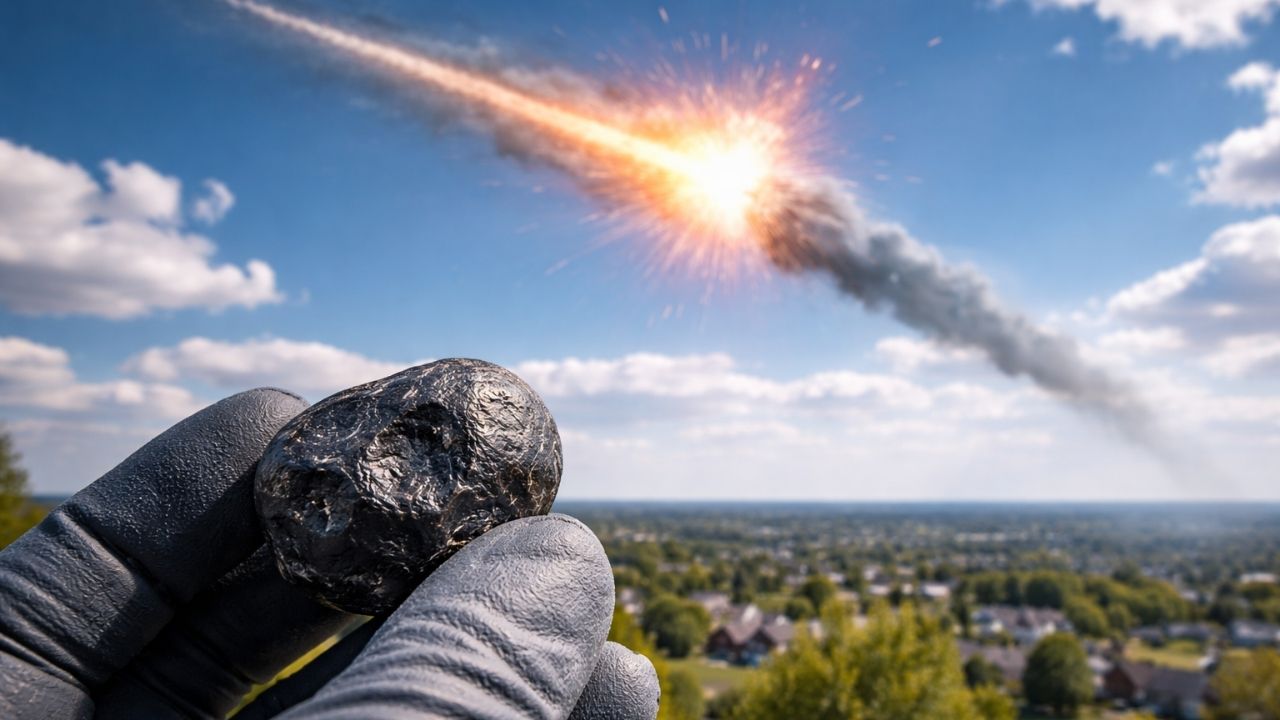
These pieces don’t look like ordinary rocks. Most meteorites have a thin, dark outer layer known as a fusion crust, formed as the surface melts during its fiery descent. This gives them a charred, almost burnt appearance, often compared to blackened charcoal.
Inside, however, they can look lighter and more textured. Some Ohio residents have already reported finding unusual black rocks, including one walnut-sized object discovered in a driveway—raising hopes that fragments may indeed be within reach.
What Should You Do If You Find One?
If you think you’ve found a meteorite, it’s important to handle it carefully. While these rocks are not dangerous and won’t be hot when they land, touching them with bare hands can contaminate their surface with oils and affect scientific analysis.
Latest Stories
 Scientists Are Tracking a Secretive Bird—and What They Find Could Change Conservation
Instead, use gloves or a clean cloth to pick it up. Compare your find with verified meteorite images online, looking for key features like a dark crust and unusual weight for its size.
If it seems promising, experts recommend contacting a university geology department and sharing clear photos. Proper identification is crucial, as genuine meteorites can provide valuable insights into the early solar system—and may even carry financial value for collectors.
Why This Event Matters—and What Comes Next
Events like this are rare, especially during daylight hours. Each meteorite recovered offers a snapshot of material that formed billions of years ago, long before Earth existed in its current form. For scientists, these fragments are more than curiosities—they’re research gold. For the public, they’re a reminder that space isn’t as distant as it seems. Sometimes, it quite literally lands at our feet.
Latest Stories
 Why Gulf Cities Are Importing Millions of Trees Every Year
And this may not be the last chance to witness something similar. The upcoming Lyrids meteor shower in April is expected to bring another wave of celestial activity, with the possibility of more fireballs lighting up the night sky. For now, though, all eyes are on Ohio—where a piece of space history might still be waiting to be found.